Here’s the thing about Monkey D. Luffy: he should not work.
A rubber boy who punches things very hard and laughs while getting stabbed is not, on paper, the foundation of a 1000+ chapter saga about freedom, oppression, and the will of an entire era. And yet. Eiichiro Oda built one of the best-selling manga of all time on exactly that premise — which makes you wonder what happens if you pull that one thread.
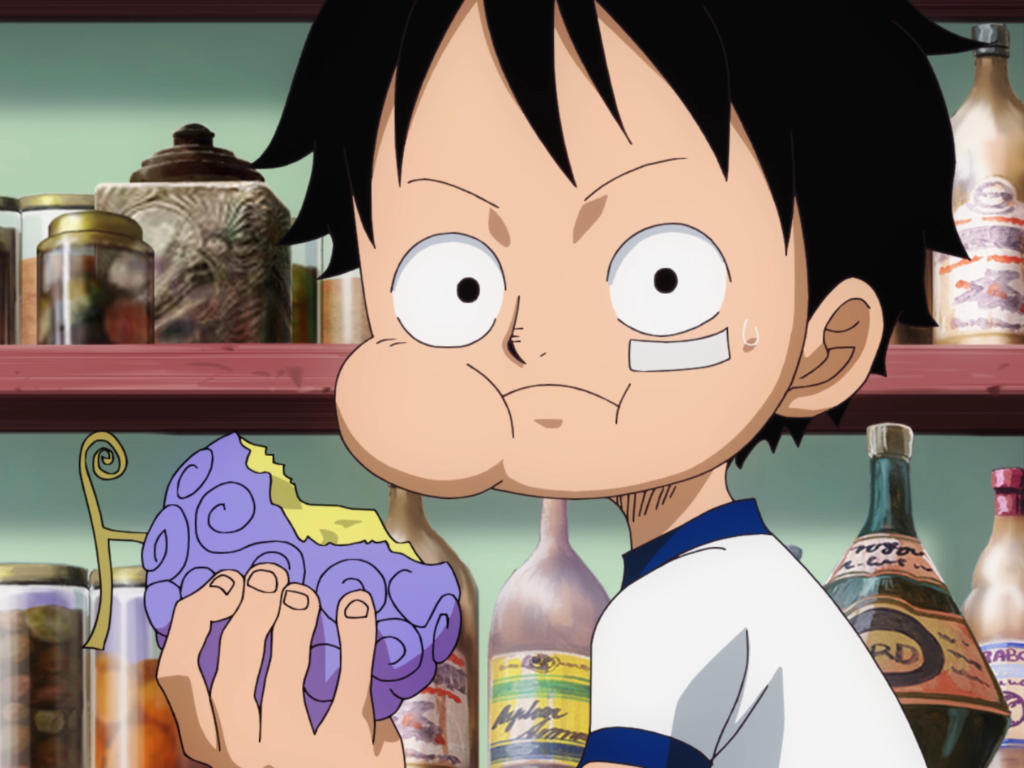
What if Shanks’ treasure chest never got opened? What if the Gomu Gomu no Mi just… wasn’t there?
The answer is weirder and more consequential than it sounds.
The Fruit Was Never Really About the Rubber
Let’s start with the reveal that retroactively changes the entire series.
In Chapter 1044, Oda dropped one of manga’s great long cons: the Gomu Gomu no Mi is not a Paramecia at all. It’s the Hito Hito no Mi, Model: Nika — a Mythical Zoan housing the “Sun God” Nika, a figure so dangerous the World Government spent 800 years trying to erase his name from history. The fruit sought Luffy out. It had been running from the government for 800 years before ending up in that chest.
That single detail transforms the hypothetical entirely. We’re not asking “what if Luffy stayed a normal human.” We’re asking what happens to an 800-year-old prophetic legacy when its chosen vessel is never chosen.
The rubber was always incidental. The Joy Boy problem is not.
Luffy Without the Fruit Is Still Luffy — Until He Isn’t
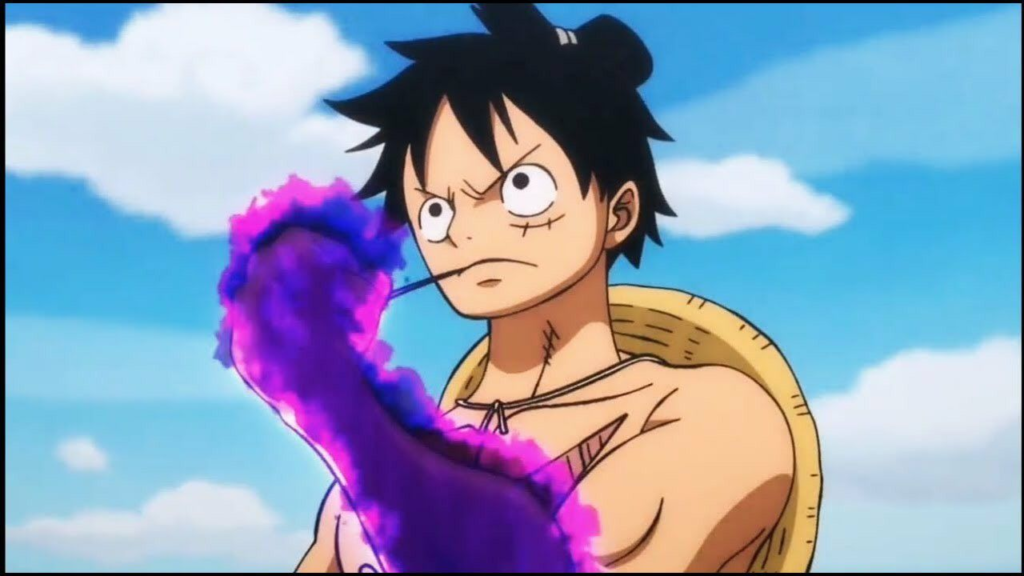
Remove the fruit, and Luffy’s personality stays intact. His dream doesn’t change. His recklessness, his loyalty, his complete immunity to social hierarchy — none of that comes from the Gomu Gomu no Mi. That’s just Garp’s terrible parenting producing a feral child with inexplicably good values.
But his trajectory collapses almost immediately.
The defining function of Luffy’s fruit isn’t just offense — it’s survival. In the early arcs, Luffy absorbs damage that would kill any normal combatant. Buggy’s chop. Arlong’s bite. Crocodile’s sand blades. His rubber constitution isn’t a style choice; it’s the mechanical reason he’s still alive by Alabasta. A non-fruit Luffy reaches East Blue and probably gets murdered by Buggy the Clown in Episode 7, which is genuinely the most embarrassing way for a pirate king saga to end.
Without the fruit, he either develops Haki far earlier out of sheer necessity, or the story never leaves Foosha Village.
The Crew Changes More Than You’d Think
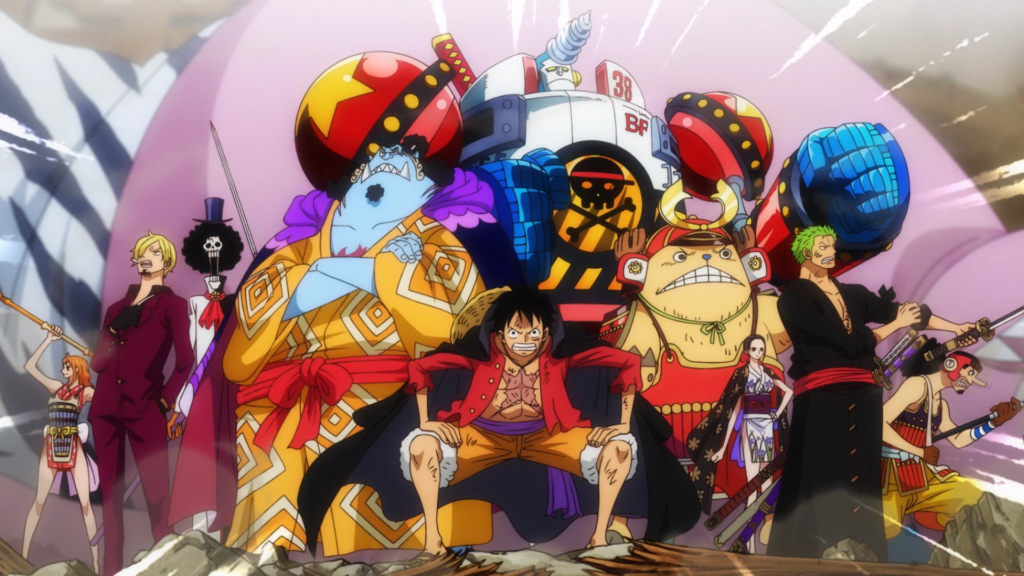
This is where the hypothetical gets structurally interesting.
Luffy’s rubber powers have always defined the crew’s combat balance. Zoro handles precision and volume. Sanji covers speed and mobility. Luffy — in the original — handles the thing nobody else can handle, the final boss problem, the person you need to hit seventeen times with something catastrophic before they acknowledge your presence.
Without that role, the crew’s architecture shifts. You’d need a Luffy who either trains into a pure Haki specialist earlier (essentially becoming a different kind of Shanks) or the crew compensates by recruiting differently — someone with a more conventionally powerful fruit filling the bruiser slot.
Either way, the crew dynamic loses its most important ingredient: the captain being the weakest member for most of the early story who somehow still leads through sheer force of narrative gravity. That tension — “he’s not even that strong yet, why is everyone following him” — is what makes the crew compelling. A Luffy who had to be competent from the start would be a fundamentally less interesting protagonist.
What Oda Actually Needed the Fruit to Do
Here’s the part that often gets overlooked in these conversations.
Oda has spoken extensively in interviews and the One Piece Log Collection extras about designing Luffy specifically as a “new kind of shounen protagonist” — someone who reads as silly to hide how singularly dangerous his ideology actually is. The fruit was a visual metaphor before it was a power system. Rubber bends. It doesn’t break. It absorbs and redirects. It’s not the power of destruction; it’s the power of persistence made physical.
That’s the theme Oda needed to embody. The world of One Piece runs on rigid hierarchies — the Celestial Dragons, the Shichibukai system, the Yonko order, eight centuries of institutional violence laundered into normalcy. Luffy’s power literally cannot be made to stay in the shape others force on it. He bounces off every system that tries to contain him. That’s not an accident of fruit selection. That’s Oda doing the thing good shounen authors do and hiding his thesis in the aesthetics.
A different fruit doesn’t just change Luffy’s moveset. It changes what Luffy means.
The Joy Boy Question Has No Clean Answer
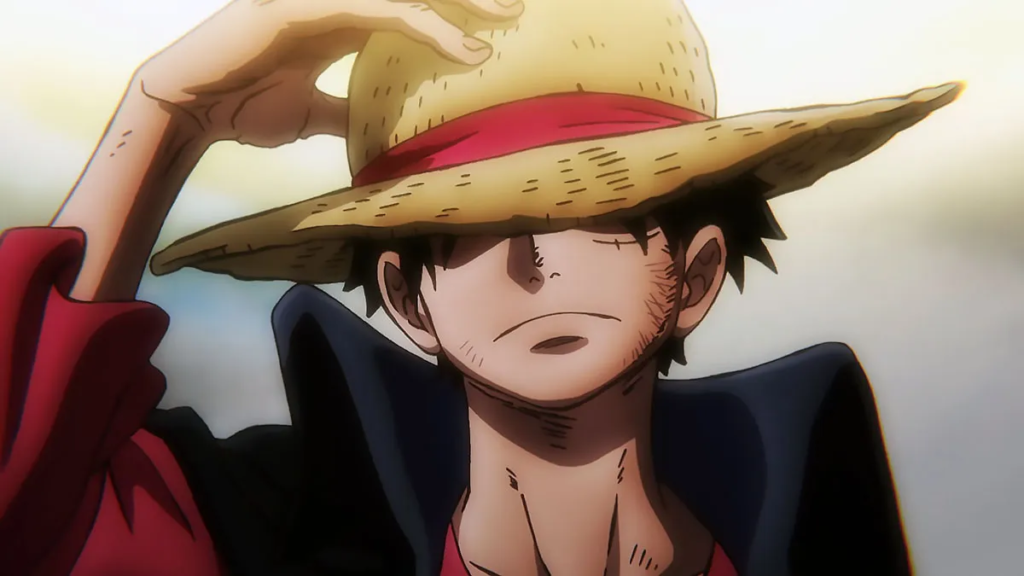
The deeper problem with this hypothetical is that Oda has now established the Gomu Gomu no Mi as having genuine agency. It chose Luffy. Or it chose the person who would become the next Joy Boy, and Luffy happened to be that person. The direction of causality is deliberately ambiguous.
Which means: maybe a world where Luffy doesn’t eat the fruit is a world where the fruit eventually finds another candidate. Maybe someone darker. Maybe someone who uses Nika’s powers without Luffy’s specific brand of catastrophically optimistic nihilism toward authority. The Elders were terrified of the fruit for 800 years — that fear wasn’t about rubber.
And maybe that version of the story ends very differently.
The Real Answer Is Structural, Not Hypothetical
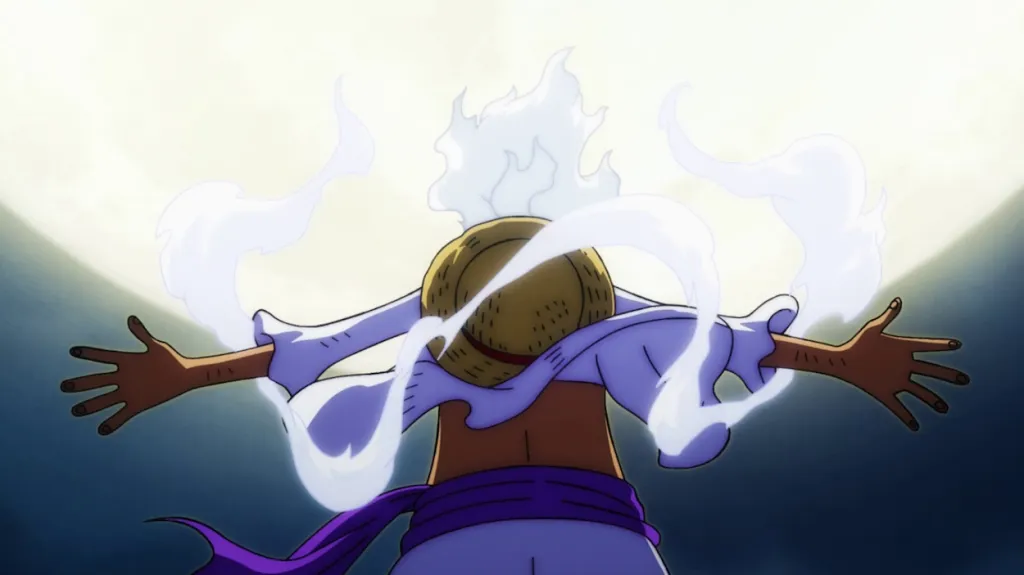
Strip it down and here’s what’s actually true: the Gomu Gomu no Mi is load-bearing architecture.
It’s not just Luffy’s power. It’s the visual language of the series, the thematic framework, the mechanical justification for his early survival, and — as of Wano — the connective tissue binding the entire 800-year backstory. You can’t remove it without pulling down several walls.
What makes that remarkable is that for 25 years, it looked like a simple gag power.
A rubber boy punching things very hard, somehow holding up the entire ceiling.