

There’s a peculiar alchemy in storytelling where the character meant to orbit the sun somehow becomes the supernova. The protagonist gets their name in the title, their face on the poster, their journey mapped from episode one to the finale—and then someone else walks into frame and rewrites the entire emotional contract of the show. It happens more than you’d think, and when it does, it creates something strange and wonderful: a narrative that accidentally tells you the truth while trying to sell you a lie.
This isn’t about who has the flashiest fights or the most screen time. It’s about excavating the characters whose inner architecture feels more honest, more devastating, more complete than the hero they’re supposedly supporting. The ones who make you wonder if the writers knew what they were doing, or if they stumbled into profundity while checking off the “compelling rival” box on their story outline.
The Armor Cracks Open: Reiner Braun’s Descent Into Himself
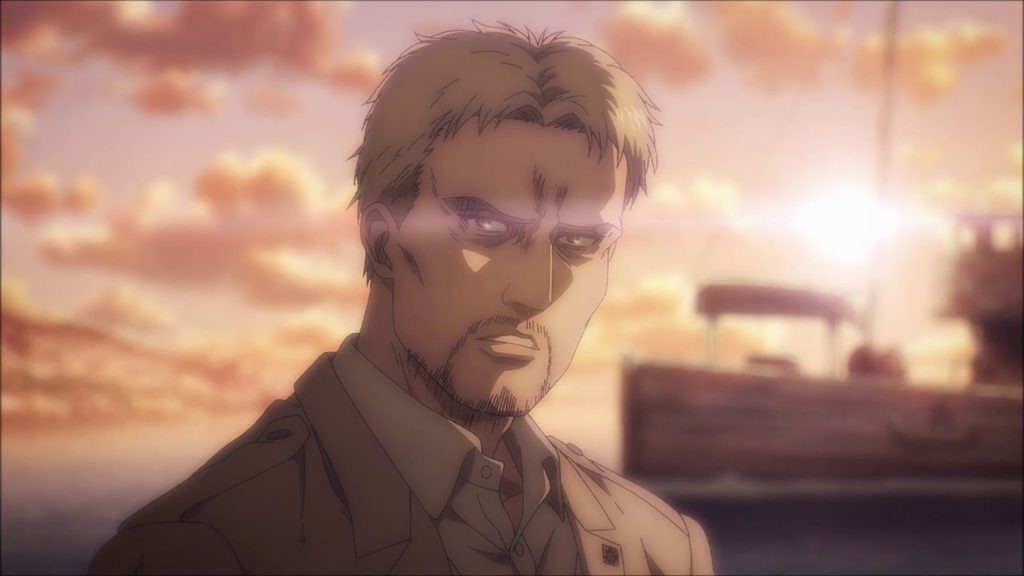
Attack on Titan gives us Eren Yeager as its engine—rage personified, destiny weaponized, freedom screamed into the void until it becomes genocide. But Hajime Isayama also gave us Reiner Braun, and Reiner is what happens when cognitive dissonance gets a character model and a three-season breakdown.
The reveal in Season 2, Episode 6 (“Warrior”) operates like a psychological mugging. Reiner, mid-conversation, casually mentions he’s the Armored Titan. No dramatic buildup, no ominous music swell—just exhaustion leaking through the cracks of a mind that’s been playing two characters for so long it forgot which one was the performance. Bertholdt’s panicked “Why are you telling them that right now?” isn’t just plot mechanics; it’s the sound of watching someone’s defense mechanisms fail in real time.
What makes Reiner’s arc surgical is how it dissects the concept of the soldier-warrior split. As a Marleyan warrior, he’s meant to be the loyal weapon, the patriot who’ll crush devils for the homeland. As an infiltrator among the Survey Corps, he became the big brother, the protector, the dependable one who’d die for his comrades. Neither role is false. Both are真実 (truth), and that’s the trap. In Season 4, we see him back in Marley, decorated and hollow, putting a rifle in his mouth because living as a war criminal who also genuinely loved his victims is a math problem with no solution.
Isayama has mentioned in interviews (specifically in the “Answers” guidebook) that Reiner was designed as a foil to Eren—but where Eren externalizes his trauma into world-ending conviction, Reiner internalizes until he’s a walking dissociative episode. The scene in Season 4, Episode 2 where he begs Eren to kill him, to end it, to please just let him stop existing, carries more weight than any of Eren’s declarations of freedom because Reiner’s suffering doesn’t have an ideology to hide behind. It’s just suffering, observed from the inside, with no exit.
The brilliance is that Reiner’s guilt doesn’t grant him moral superiority or redemption—it just makes him aware, which might be the worst punishment the story could devise. He keeps living not because he’s strong, but because even suicide requires a level of conviction he can no longer access. That’s a level of psychological honesty most protagonists don’t touch, because protagonists need to drive the plot forward. Reiner just needs to survive the next scene, and that somehow says everything about what war does to anyone paying attention.
The Economics of Discarded Potential: Rock Lee and the Taijutsu Trap
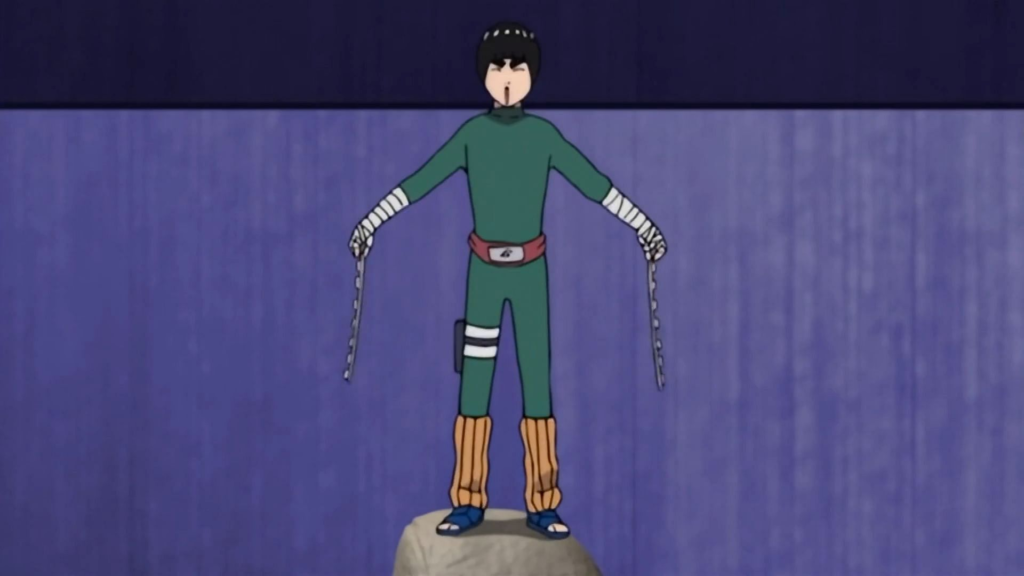
Naruto gives us the child of prophecy, the nine-tailed jinchuriki, the reincarnation of ninja Jesus. Then it gives us Rock Lee, who can’t use ninjutsu or genjutsu, whose entire existence is a middle finger to genetic determinism, and whose fight against Gaara in the Chunin Exams (Episodes 48-50) remains more emotionally coherent than the entire Fourth Shinobi War.
Lee’s introduction is designed as comic relief—the bowl cut, the caterpillar eyebrows, the green jumpsuit that screams “visual gag.” Then Masashi Kishimoto does something cruel and beautiful: he makes Lee’s limitations absolute. Not “works really hard and unlocks secret power,” but “will never perform jutsu, full stop, no workaround.” In a world where your power ceiling is largely determined at birth by bloodline limits and tailed beasts, Lee is the economic underclass given a character sheet.
The Gaara fight is where this becomes textual. When Lee drops his ankle weights and the thud cracks the arena floor, it’s not just a cool moment—it’s the reveal that his entire training regimen is compensating for a fundamental market disadvantage. Every other ninja is investing in jutsu diversification; Lee is min-maxing a single stat because it’s the only one his build allows. Then he opens the Eight Gates, pushes his body past sustainability, and nearly kills Gaara through sheer mechanical optimization of the one thing he’s permitted to do.
And he loses. Gets his arm and leg shattered. Told by medical experts his ninja career is over at age thirteen. This is where the narrative makes its implicit argument: that hard work can make you spectacular, can make you dangerous, but cannot actually overcome structural inequality when the system itself is built on inherited advantages. Lee’s recovery and return is framed as triumphant, but Kishimoto quietly shelves him for most of the series afterward, because the story knows what it accidentally said.
There’s a real-world resonance here that maps directly onto Japan’s Lost Decades—the economic stagnation from the 1990s onward that killed the postwar promise of upward mobility through effort alone. The generation that grew up during the bubble economy’s collapse watched the meritocracy myth curdle. Lee’s character, created in the late 1990s, reads like a working-class anxiety dream: what if you optimize everything you can control and it’s still not enough? What if the protagonist gets the prophecy and you get the participation medal?
Lee never becomes bitter, which is either inspirational or tragic depending on your tolerance for characters who don’t learn to resent the game that rigged itself against them. His dedication to Guy-sensei and the “springtime of youth” philosophy becomes a coping mechanism disguised as shonen optimism. Meanwhile, Naruto gets to unlock new forms whenever the plot demands because he’s got a kaiju in his stomach and god-tier genetics. Lee just has leg exercises and the growing awareness that enthusiasm is not a substitute for systemic advantage.
The Detective as Death Drive: L and the Aesthetics of Burnout
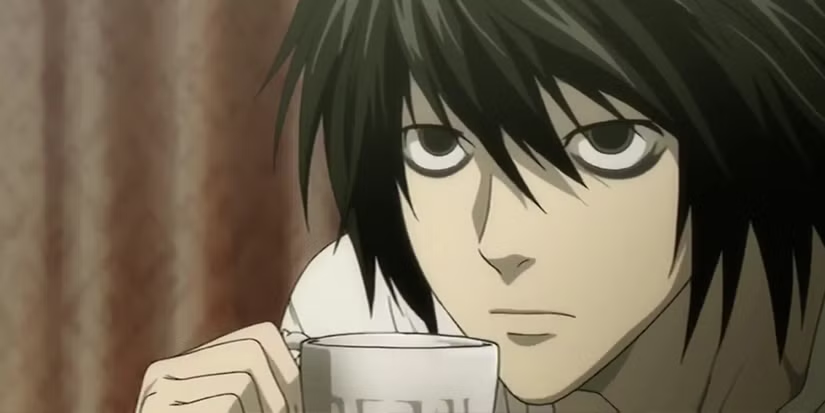
Death Note positions Light Yagami as the protagonist, the anti-hero, the “what if the smart kid became evil” thought experiment. But L—real name L Lawliet, fake names piled up like psychological ablative armor—is the story’s actual thesis on what intelligence costs when you weaponize it against the world.
L’s introduction in Episode 2 is a masterclass in characterization through negation. He doesn’t sit properly, doesn’t eat normally, doesn’t sleep on a schedule, doesn’t have hobbies or friends or any visible life outside the case. He’s not eccentric for flavor—he’s what happens when you delete every human subroutine that doesn’t serve the pattern-recognition engine. The sugar addiction, the hunched posture, the dark circles painted on like a skull’s eye sockets: this is a body that’s been optimized into malfunction.
What makes L functionally tragic is that he’s correct about everything and it doesn’t matter. He identifies Light as Kira almost immediately (Episode 11, the tennis scene is basically L saying “I know it’s you” through subtext so thick you could spread it on toast). But knowing isn’t enough, because the system requires proof, and Light’s power specifically invalidates proof. L’s entire existence becomes an exercise in epistemological frustration—being the smartest person in the room while the room’s rules are designed to make intelligence irrelevant.
The real devastation comes in their confinement arc (Episodes 15-17), where L chains himself to Light for weeks of forced proximity. It’s framed as tactical, but there’s something almost suicidal about it—binding yourself to the person you know is a mass murderer, who you cannot prove is a mass murderer, who you’re starting to almost relate to because you’re both freaks of similar cognitive caliber. When L says he considers Light his first friend, it lands like a terminal diagnosis. This is what your life becomes when you’re built for solving problems but live in a world that generates problems faster than solutions.
Tsugumi Ohba (the writer) mentioned in the “Death Note: How to Read 13” guidebook that L was designed to be cooler than Light, which is a hell of a thing to admit about your protagonist. But it’s true—L’s death in Episode 25 carries more weight than Light’s eventual downfall because L loses while being right, which is a more adult kind of tragedy than the villain getting his comeuppance.
That final scene, where L washes Light’s feet before dying, is either Christ imagery or the ultimate mockery of it. L knows Light will kill him, knows he’s failed, and performs this act of service anyway—not redemption, just the last move available when you’ve run every probability and they all end the same way. Then he dies on the floor, alone despite Watari’s presence, having accomplished nothing except proving that being correct is not the same as being useful.
The story continues after L dies, with Near and Mello carrying his will forward, but it feels like reanimating a corpse. L was the moral and intellectual center because he represented the doomed project of trying to impose order on chaos through sheer cognitive output. Light wanted to become order; L just wanted to solve the puzzle. One of those motivations has narrative immortality. The other gets a heart attack and a funeral no one attends.
Askeladd’s Viking Economics: When the Monster Writes the Morality
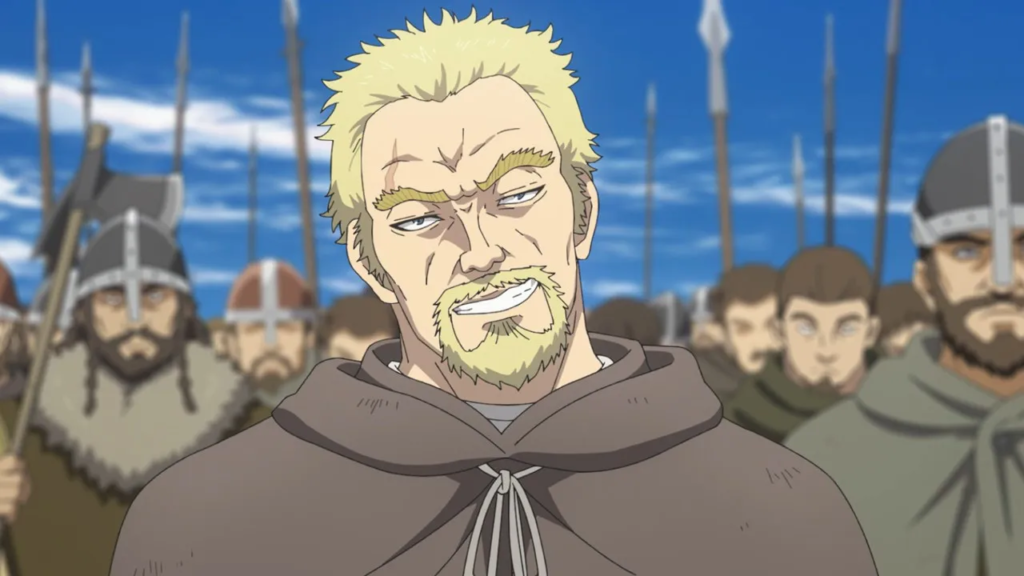
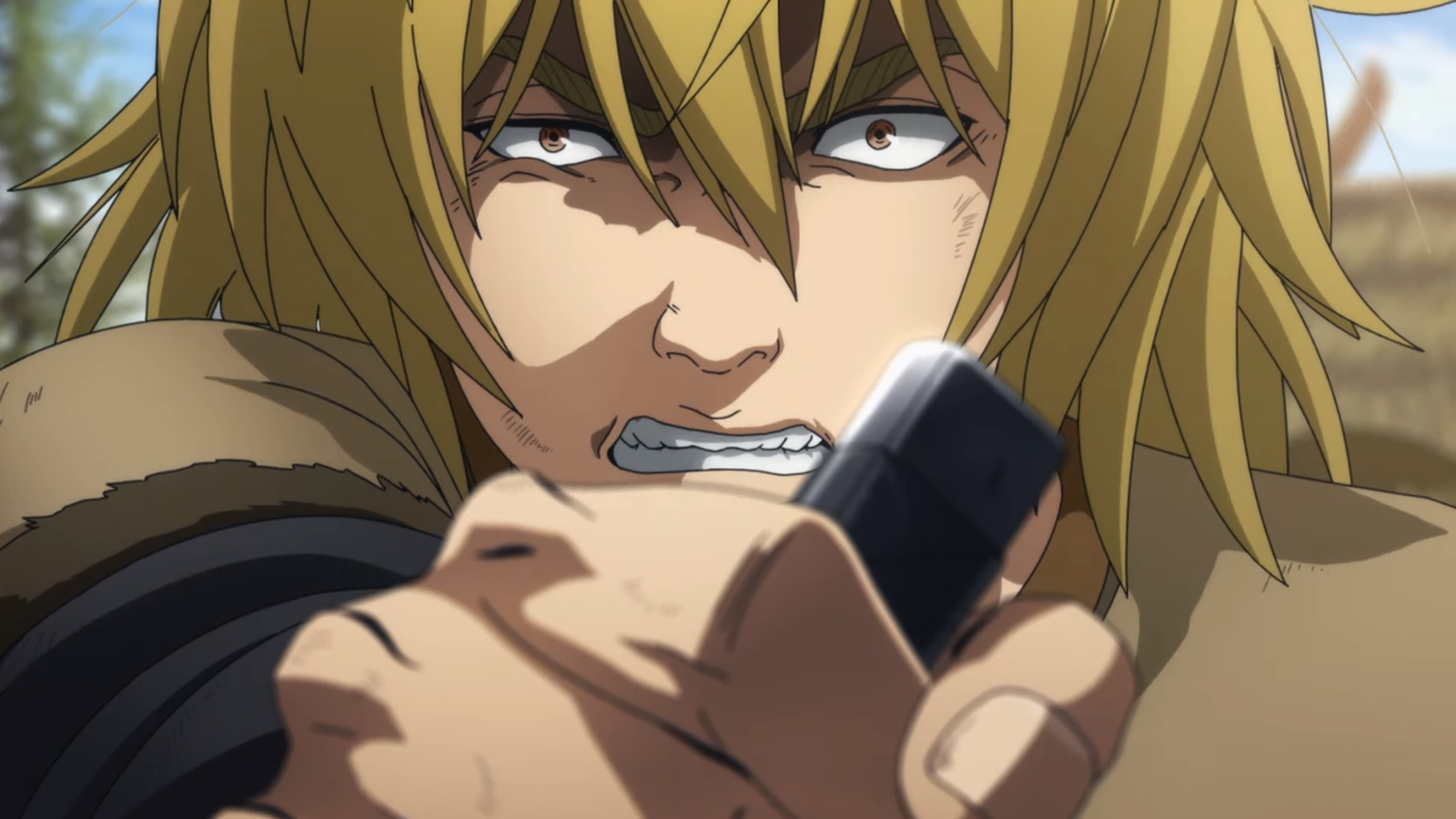
Vinland Saga gives us Thorfinn, the revenge-obsessed child soldier, as its ostensible protagonist. But Makoto Yukimura quietly spends the first season (Prologue Arc) building Askeladd—the mercenary leader, the tactical genius, the man who killed Thorfinn’s father—into something more structurally complex than the revenge target he’s supposed to be.
Askeladd operates like a Viking-era middle manager trapped between imperial ambitions and grunt-level survival. He’s half-Welsh, half-Danish, culturally displaced from both, running a mercenary crew in 11th-century England during the Danish invasion. His entire existence is navigating power structures he doesn’t control while pretending to be the kind of brute those structures value. When he recites passages from Artorius’s saga (the Welsh legends of King Arthur) to himself, it’s not flavor text—it’s the sound of someone maintaining an internal civilization while externally committing war crimes for market wages.
The turning point comes in Episode 24, “End of the Prologue,” where Askeladd kills King Sweyn in the middle of a throne room to prevent the invasion of Wales. It’s framed as impulsive, but everything Askeladd does is calculated: he knew this was his exit, knew Thorfinn would get his duel, knew Canute would need this specific catalyst to become king. He orchestrates his own death as a political tool, and the fact that it also happens to fulfill his personal loyalty to a Welsh heritage he could never publicly claim makes it tragedy wearing strategy’s mask.
What Yukimura does here is rare: he makes the antagonist the ideological core. Askeladd’s nihilism about the Viking system—the raids, the slavery, the casual brutality rebranded as warrior culture—becomes the story’s actual moral position. When he tells Thorfinn in Episode 4, “You have no enemies,” it’s not wisdom; it’s the exhausted conclusion of someone who’s been inside the machine long enough to see it’s just metal and meat, no grand meaning, just people doing violence because the economic incentives point that direction.
The historical context matters. Yukimura created Vinland Saga in 2005, during Japan’s ongoing reckoning with its own imperial history—the wars, the occupations, the slow cultural processing of what nationalistic violence actually built. Askeladd’s character mirrors that disillusionment: he’s part of the conquering force but ethnically aligned with the conquered, profiting from a system he philosophically rejects, aware that his individual morality changes nothing about the structural mechanisms grinding people into resources.
His death doesn’t redeem him because redemption would imply the system allows for it. Instead, he just removes himself from the board in the least wasteful way possible, having spent his entire arc proving that being the smartest, most capable person in the room means nothing when the room is a slaughterhouse with a flag on top. Thorfinn gets to live and grow beyond revenge, but only because Askeladd died making sure the story could continue. That’s not heroism; that’s just tactical resource allocation applied to your own mortality.
The pattern that emerges across these characters is a kind of narrative honesty that protagonists can’t afford. Main characters need to move the plot, embody themes, carry symbolic weight. Side characters just need to be people, and sometimes people are more interesting than symbols. They get to fail without the story collapsing. They get to be right and lose anyway. They get to exist in the margins where the contradictions live.
These aren’t better characters because they’re more likable or more powerful. They’re better because they’re written with the understanding that complexity doesn’t always resolve, that being correct doesn’t guarantee victory, and that sometimes the most honest thing a story can do is show you someone who sees the whole picture and still can’t escape it. The main story gives you the destination. The side character shows you what the journey actually costs.