
Most anime treats violence like confetti. Explosions bloom, blood sprays in aesthetic arcs, characters take planet-destroying attacks and show up next episode with a bandaid and renewed determination. It’s operatic, it’s fun, and it has roughly the same relationship to actual harm as a firework display has to a house fire.
But some anime remember that violence is a transaction. You spend something—your body, your sanity, the person you used to be—and you don’t get change back. These shows understand that the interesting part isn’t the impact. It’s the crater left behind.
Vinland Saga: The Accountant’s Ledger of Revenge
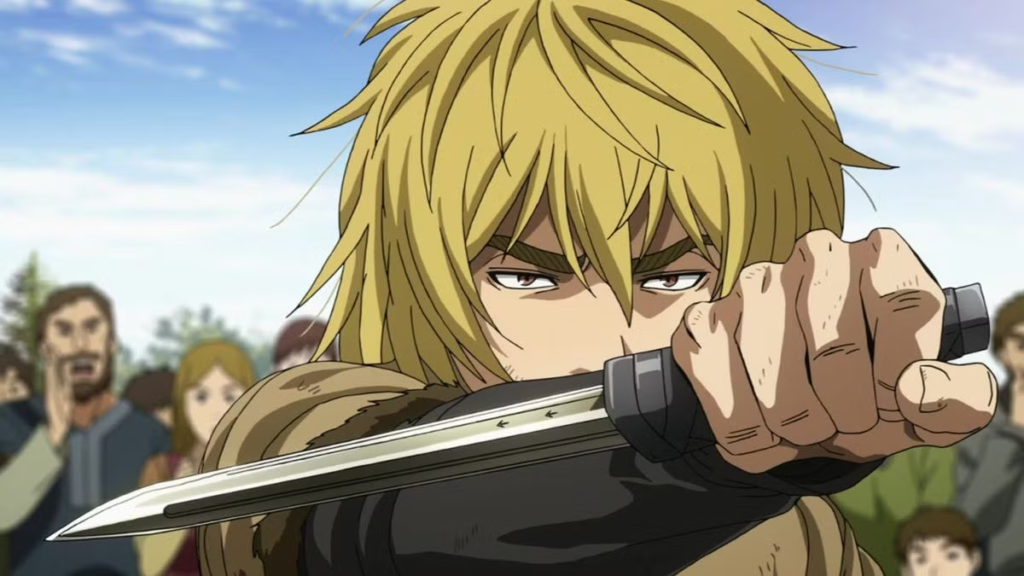
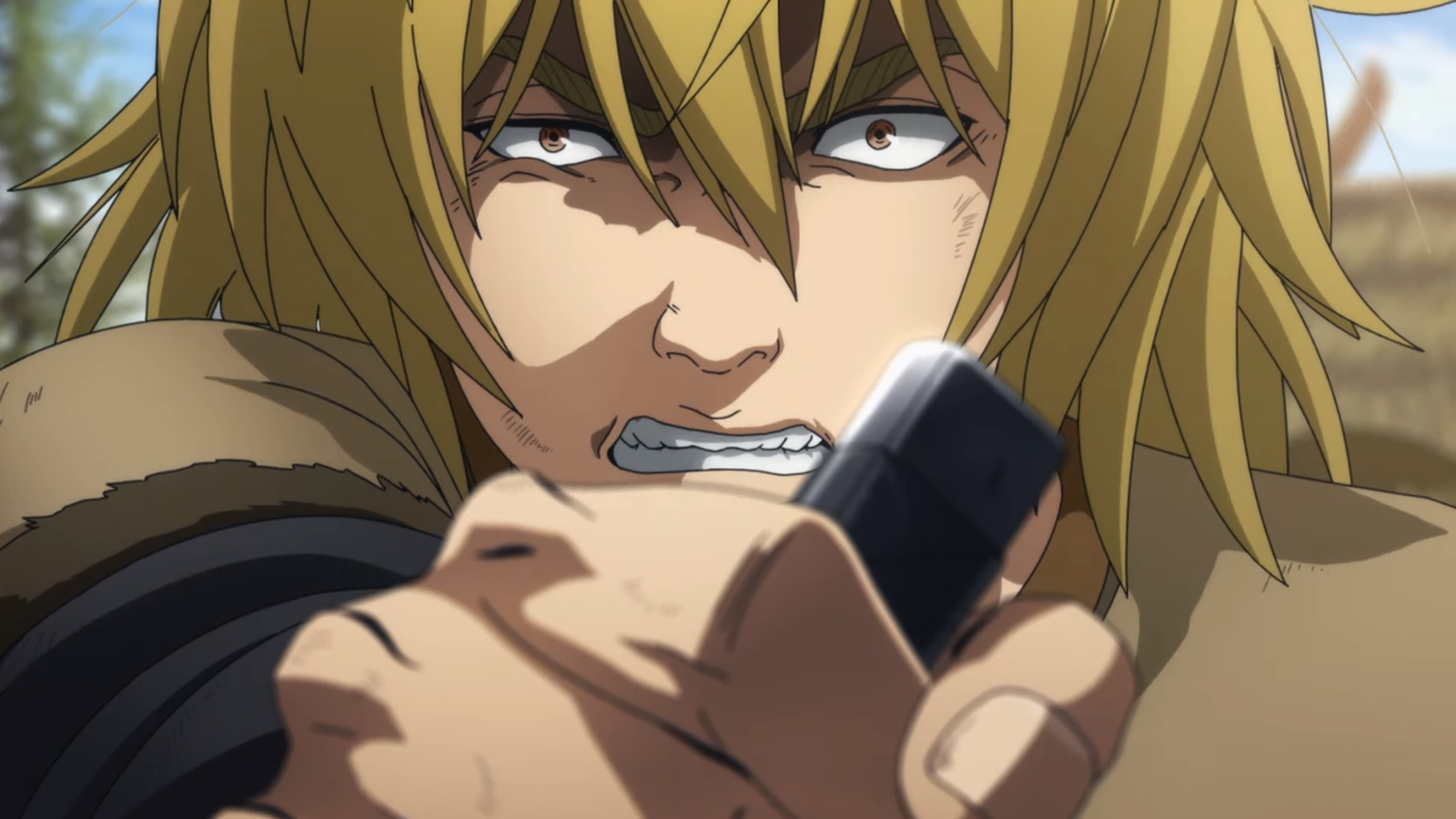
Thorfinn Karlsefni spends the entire first season of Vinland Saga turning himself into a precision instrument for killing. He’s good at it the way a surgical scalpel is good at cutting—perfectly, specifically, and at tremendous cost to everything else he might have been.
The show doesn’t dress this up. When Thorfinn slits throats in the English countryside, there’s no dramatic swell of music suggesting this is noble or necessary. There’s just the wet sound, the body dropping, and another tally mark on a ledger that will never balance. His target, Askeladd, keeps him close specifically because Thorfinn’s obsession makes him useful. It’s like keeping a rabid dog on a leash made of its own hatred—functional until it isn’t.
What Vinland Saga understands is that violence doesn’t just destroy the victim. It’s a corrosive that eats through the person swinging the blade. By the time Thorfinn finally gets his chance to duel Askeladd properly, he’s so hollowed out by murder that he can barely remember why he started. The revenge he’s built his entire adolescence around tastes like ashes before he even takes the bite.
The series is meticulous about showing how medieval warfare actually worked—not glorious battlefield charges but ambushes in the mud, mercenaries switching sides based on who’s paying, strategic massacres of civilians because feeding an army was cheaper than fighting one. When Askeladd’s band attacks a village, they’re not conquering evil—they’re freelancers liquidating assets. The people they kill don’t get warrior’s deaths. They get murdered in their homes because they had the bad luck to live somewhere strategically inconvenient.
Thors, Thorfinn’s father, delivers the show’s thesis before he dies: “You have no enemies.” He means this literally. Violence in Vinland Saga isn’t a contest between good and evil. It’s a system error. The characters who treat it as meaningful—who build their identities around being warriors—end up crushed by the machinery they thought they were operating. Thorfinn spends years feeding corpses into this machine, believing it will eventually dispense meaning. It does not.
Berserk (1997): When the Bill Comes Due
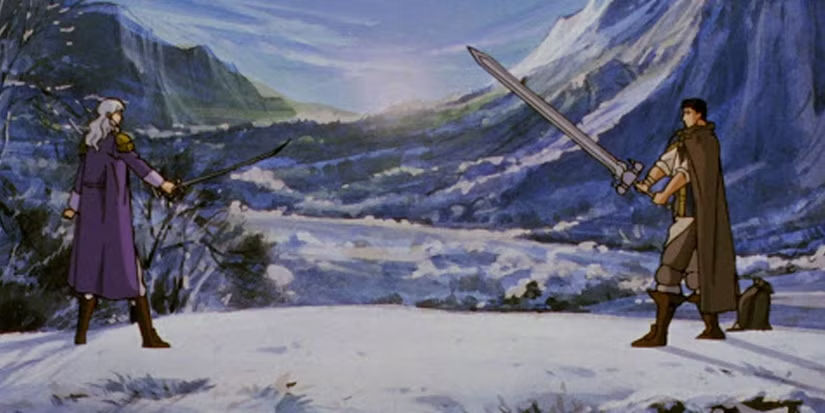
The 1997 Berserk anime spends twenty-four episodes building Guts into the platonic ideal of a fantasy protagonist. He’s got the giant sword, the tragic backstory, the growing found family, the mentor figure in Griffith. The show lets you believe, almost lets itself believe, that this is the kind of story where strength and determination triumph.
Then the Eclipse happens.
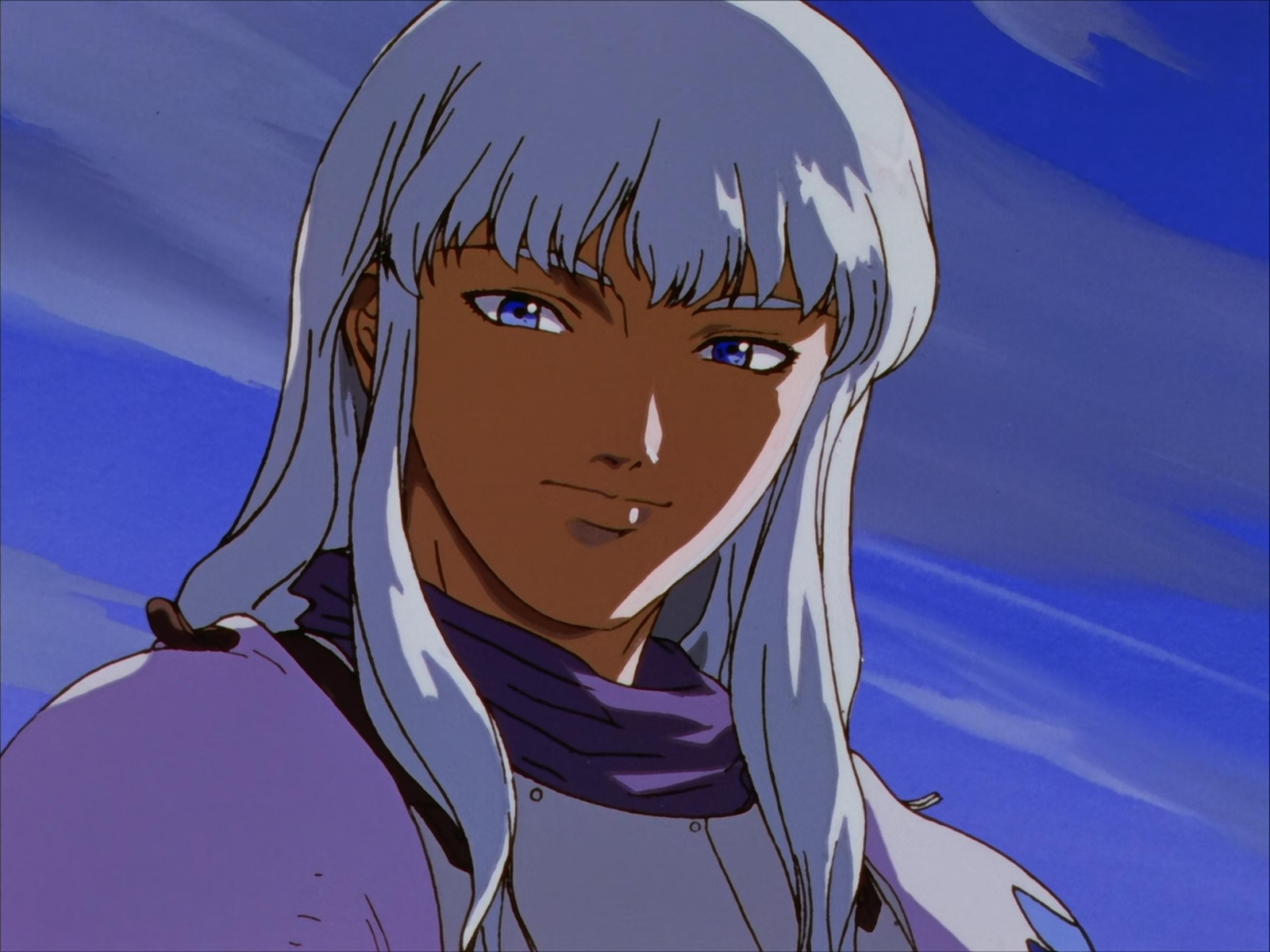
For those who somehow avoided spoilers: the Eclipse is what happens when a narrative catches fire and burns down to the foundation. Griffith, broken and discarded, is offered a choice—sacrifice everyone he’s ever cared about to become something transcendent. He accepts. What follows isn’t a battle scene. It’s a slaughter that makes clear exactly how much the universe values human courage when set against actual power.
Kentaro Miura, the manga’s creator, mentioned in interviews that he wanted the Eclipse to feel like “the end of everything,” and the anime adaptation respects that vision with brutal efficiency. Watching the Band of the Hawk get devoured by demons isn’t exciting. It’s nauseating. These are people we’ve spent half a season learning to care about, and they die screaming, begging, trying to protect each other in ways that only make their deaths worse.
Guts survives, but survival is just another word for being forced to continue existing in a world that broke. He loses an eye, an arm, and everyone he loved except Casca—who loses her sanity to trauma so severe it shatters her mind into fragments. The show ends with Guts branded, hunted, and fundamentally altered. The violence didn’t make him stronger. It carved out pieces of him that can’t be replaced.
What makes Berserk’s approach to violence so effective is that it earns the Eclipse. The entire series is a patient construction of trust—in Griffith’s dream, in the Band’s bond, in the fantasy genre’s unspoken promise that good people who fight hard enough will be okay. Then it leverages that trust to maximum damage. The betrayal works because we believed. The violence matters because we cared.
Monster: Violence Without Blood
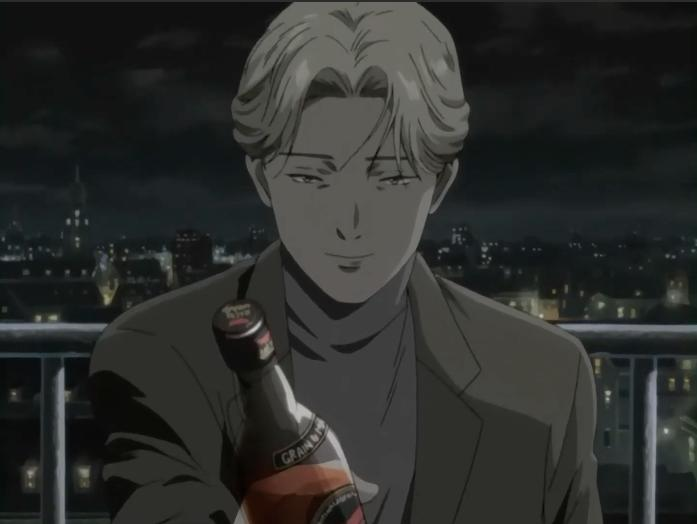
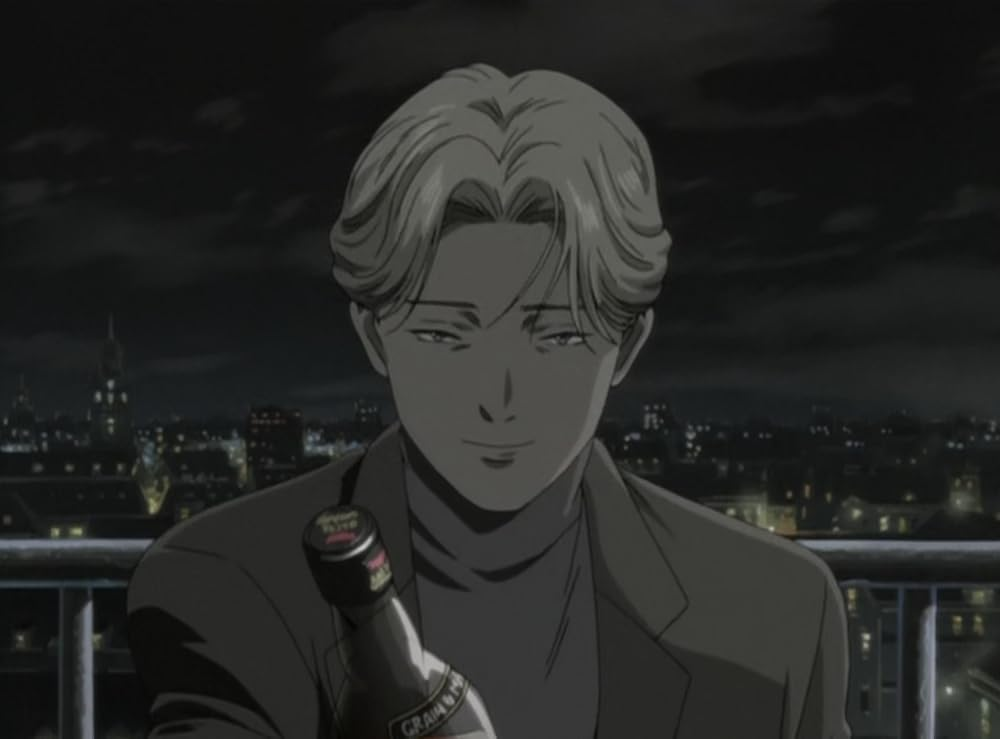
Monster proves you don’t need swords or fists for violence to leave scars. Dr. Kenzo Tenma saves a boy’s life and spends the next seventy-four episodes discovering that he resurrected something that treats human existence like a hypothesis to be tested through elimination.
Johan Liebert doesn’t kill people the way normal antagonists do. He’s not angry or greedy or zealous. He’s interested in the mechanics of destroying a person while leaving their body intact. He’ll befriend someone, learn what gives their life meaning, then systematically dismantle it. A detective who survives one of Johan’s “experiments” describes it like this: “He didn’t take my life. He took my reason for living and showed me how easily it could be done.”
The series is relentless about showing violence as a chain reaction. When Tenma saves Johan, he’s not just saving one boy—he’s preserving a cascade of future deaths and broken minds. Every person Johan destroys can be traced back to that operating table, to Tenma’s choice to value the life in front of him over the life of the adult politician he could have saved instead. The show doesn’t let anyone off the hook with “how could he have known?” It insists that Tenma did know, at some level, and chose mercy anyway. Then it makes him live with the results.
What’s devastating about Monster is how it treats moral injury. Tenma doesn’t get physically hurt much, but watching him age across the series is like watching a building slowly condemned. He starts as an idealistic surgeon who believes in the sanctity of life. He ends as someone who’s seen what life can be used for and has to decide whether his principles survive that knowledge. Multiple times, he has Johan in his sights and can’t pull the trigger—not because he lacks courage, but because executing someone would validate everything Johan claims about the worthlessness of human morality.
The show also refuses the comfort of clear villains. Almost everyone doing terrible things in Monster has reasons that make sense from inside their own damage. The border guards who look the other way, the corrupt officials, the traumatized asylum patients—they’re not evil, they’re just broken in specific ways that produce harm. Violence, the series argues, isn’t an aberration. It’s what happens when traumatized people with power encounter systems that prioritize order over healing.
The Economics of Consequence: Why This Is Rare
Here’s something most anime fans don’t think about: violence without consequence is a market efficiency. It’s cheaper to animate, easier to merchandise, and more comfortable to consume. The reason most shonen series treat combat like a sporting event is because showing realistic violence means showing recovery time, medical bills, psychological trauma, and permanent disability—none of which move figures or maintain the weekly chapter grind.
The manga industry’s economics directly influence how violence gets portrayed. Weekly serialization in publications like Shonen Jump demands constant escalation and rapid story turnover. There’s no room for a character to spend six months in physical therapy after getting his ribs shattered. The market optimizes for spectacle over consequence because spectacle sells to the target demographic of teenage boys looking for escapist power fantasies.
This is why most serious treatments of violence come from seinen magazines aimed at adults, or from anime with complete manga source material that freed the creators from the weekly treadmill. Vinland Saga ran in Weekly Shonen Magazine initially but moved to Monthly Afternoon, a seinen publication, where Yukimura Makoto could pace the story around character degradation rather than fight choreography. Berserk ran in Young Animal, a magazine that could afford to publish monthly and let Miura obsess over detail. Monster was always seinen, aimed at readers old enough to have experienced real loss.
The economic pressure isn’t just about pacing—it’s about message. A seinen audience has buying power and life experience. They’ve held jobs, paid rent, maybe seen violence or its aftermath in real life. They know that getting stabbed doesn’t just mean a dramatic scene and a cool scar. It means infections, medical debt, PTSD, and permanent changes to how your body moves. Shows that treat violence seriously are speaking to this knowledge, respecting it rather than asking viewers to pretend they don’t know better.
Megalo Box: The Body as Limited Resource
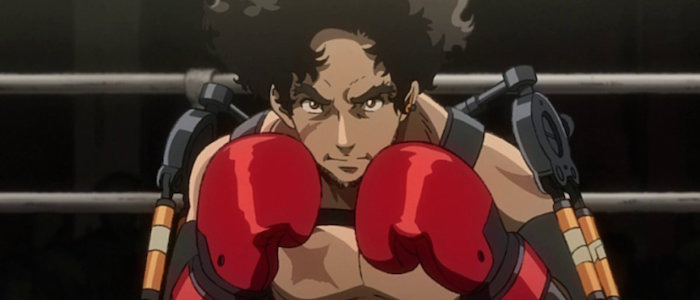
Megalo Box is nominally about boxing, but it’s really about what happens when you treat your body like a rental car you plan to return destroyed. Joe fights without the mechanized “Gear” that other boxers use—partially as a statement, partially because he’s too poor to afford good equipment. This means every punch he takes lands on actual flesh, actual bone, actual organs that don’t have insurance plans.
The show is meticulous about showing damage accumulation. Joe doesn’t reset between fights. His ribs stay cracked. His face stays swollen. His hands develop the kind of damage that makes gripping things painful even when he’s not actively being punched. The camera lingers on these details not for shock value but as a running tally—this is the price, this is what’s being spent, and there’s no payment plan.
What makes Megalo Box’s violence meaningful is the economic context. Joe isn’t fighting for glory or revenge. He’s fighting to exist in a system that prices human dignity just slightly out of reach for people like him. The rich fighters in their expensive Gear are playing a sport. Joe is committing slow-motion suicide as performance art, hoping someone notices before he runs out of body to damage.
The show’s setting—a near-future where undocumented workers live in slums outside the city proper—isn’t subtle about its commentary. Violence in Megalo Box happens because the alternative is worse. Joe fights because not fighting means returning to complete invisibility, to a life where society has formally decided he doesn’t matter. The brutality isn’t incidental. It’s the point. He’s proving he exists by creating evidence in the form of damage, both to others and himself.
Showa Genroku Rakugo Shinju: The Violence of Art
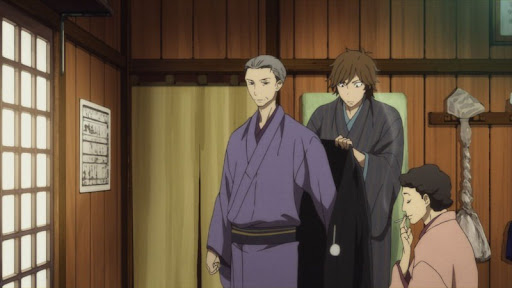
Rakugo seems like the odd entry here—it’s about traditional Japanese storytelling, not combat. But watch what these characters do to each other through narrative, through performance, through the careful deployment of art as a weapon.
Yakumo and Sukeroku spend their lives in a kind of artistic mutual destruction. Sukeroku treats rakugo like a blunt instrument—he’s brilliant, innovative, and so committed to the art form that he can’t imagine life outside it. Yakumo is precise, classical, and so wounded by his own relationship with performance that he can barely stand to pass it on. When Sukeroku dies (along with Miyokichi in the show’s central tragedy), Yakumo doesn’t just lose his rival. He loses the only person who understood that rakugo could matter enough to destroy you.
The violence in Rakugo is slow and institutional. It’s in how the art form itself demands total submission—you don’t do rakugo casually, you let it colonize your entire personality until you’re just a vessel for stories that existed before you and will continue after. It’s in how Yakumo raises Konatsu in proximity to the art that killed her parents, knowing she’ll either embrace it and risk the same fate or reject it and lose her connection to their memory.
The show’s depiction of Miyokichi is particularly brutal. She’s a geisha, then a rakugo performer, then a wife, then a mother—each role stripping away another piece of autonomy until she’s defined entirely by her relationship to men who love rakugo more than they could ever love her. Her death isn’t an accident. It’s the logical conclusion of being married to someone who treats art as a more legitimate relationship than human connection.
What Rakugo understands is that violence doesn’t require blood. It just requires power differential and the willingness to use it. Every time Yakumo performs a story that tears open his own trauma, he’s doing violence to himself. Every time he teaches Yotaro, knowing the art will consume him, he’s passing on the wound. The series treats this as seriously as any battlefield—because for the characters, it is one. Their casualties just take longer to count.
The Cost of Memory
The through-line connecting these shows is simple: they remember that violence changes people, and they’re willing to show the change. Not just in flashy dramatic moments, but in the quiet scenes after. In how Guts can’t sleep. In how Thorfinn can’t look at his own hands. In how Tenma second-guesses every medical decision. In how Joe’s breathing sounds wrong. In how Yakumo performs with the haunted precision of someone enacting a memorial service every night.
These aren’t shows about violence. They’re shows about carrying the weight of what violence does, of discovering that strength isn’t glorious, that victory costs, and that some debts compound interest forever. They ask viewers to acknowledge that damage is real and permanent, that people don’t respawn, that trauma doesn’t resolve with a speech and a power-up.
It’s uncomfortable work. It’s also the only kind of violence in fiction that means anything.