

If you’ve ever watched Jujutsu Kaisen and thought, “This feels a little too close to something people actually believed,” you’re not wrong. The curse system isn’t just edgy anime flavoring—it’s stitched together from centuries of Japanese folklore, social anxiety, and the deeply human talent for turning stress into monsters with teeth.
What makes it unsettling isn’t the violence. It’s the familiarity. These curses don’t come from hell. They come from people having a bad time and not handling it well, which is historically accurate and emotionally rude.
1. Curses as Emotional Pollution (a Very Old Idea)

In Jujutsu Kaisen, curses are born from negative emotions leaking out of humans like toxic steam. Fear, regret, resentment—leave them unattended long enough and they coagulate into something that wants you dead. That concept maps almost perfectly onto traditional Japanese beliefs around kegare, or spiritual pollution.
In folklore, death, illness, and even strong emotional upheaval were thought to contaminate spaces and people. Shrines still practice purification rituals for this reason. What the series does—brilliantly and uncomfortably—is scale that belief up into a modern setting. Instead of villages fearing bad harvests, you get subway stations birthing curses because commuters hate their lives.
Take the early arcs involving Mahito. His ability to manipulate souls isn’t random body-horror nonsense. It echoes old folk beliefs that the soul (or tamashii) is malleable and vulnerable under emotional stress. Mahito doesn’t just kill people; he “reshapes” them, which feels like folklore screaming, “This is what emotional neglect does.”
What quietly works here is that curses aren’t punishments from gods. They’re side effects. No moral judgment, just consequences. It’s hard not to appreciate how mercilessly honest that is.
2. Onryō, Vengeful Spirits, and That One Kid Who Ruined Everything

Japanese folklore is packed with onryō—vengeful spirits born from extreme suffering. These aren’t classy ghosts with unfinished business. They’re rage incarnate. Sound familiar?
Enter Rika Orimoto, whose transformation into an overwhelmingly powerful curse is one of the clearest folklore parallels in the series. Her attachment to Yuta Okkotsu mirrors classic onryō tales where love, loss, and guilt fuse into something catastrophically protective.
What makes this hit harder is context. Rika isn’t evil. She’s affectionate, loyal, and horrifyingly lethal. That duality reflects traditional stories where spirits aren’t monsters because they want to be, but because they were emotionally cornered. The series doesn’t romanticize this. It lets the damage speak for itself, which somehow makes it worse in the best way.
A lesser-discussed detail: Rika’s curse isn’t triggered by death alone but by unresolved emotional dependency. Old folklore often warned against excessive attachment—not for poetic reasons, but because it was believed to trap souls. Jujutsu Kaisen doesn’t modernize that belief; it weaponizes it.
3. Modern Anxiety, Late Capitalism, and Why Tokyo Is a Nightmare Factory
Here’s where the curse system stops being mythological nostalgia and starts feeling like social commentary with claws. Curses cluster in urban areas, especially Tokyo. This isn’t just because cities look cool when exploding.
Japan’s post-bubble economy, brutal work culture, and social isolation have created an environment where emotional repression is practically a civic duty. Folklore once blamed plagues on angry spirits; Jujutsu Kaisen quietly suggests that endless overtime and emotional bottling do the same job, just with better lighting.
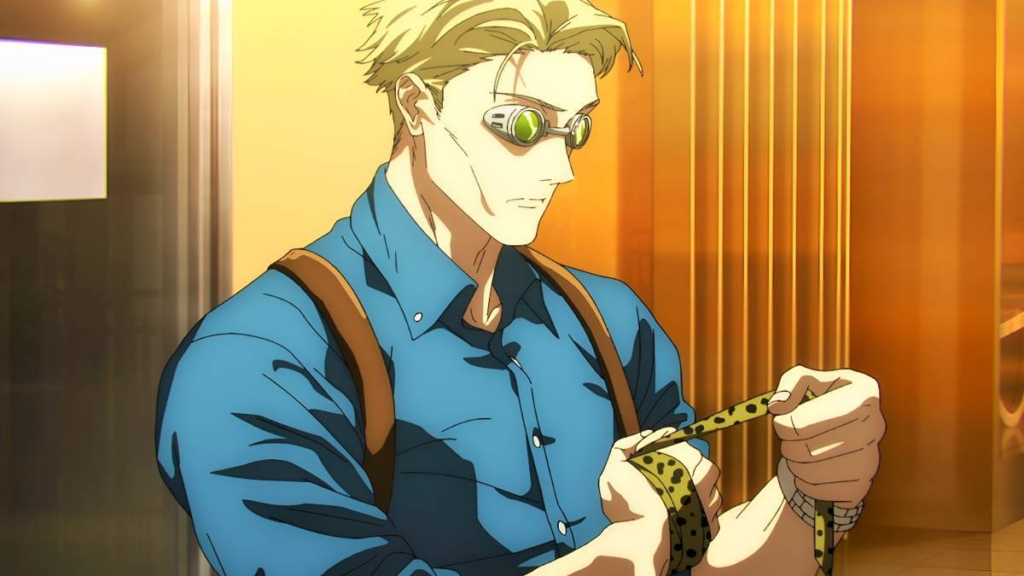
Characters like Nanami Kento embody this tension. His resentment toward corporate life isn’t a gag—it’s practically a curse origin story waiting to happen. The show treats modern labor exhaustion as a supernatural risk factor, which feels uncomfortably plausible.
What’s effective here is that sorcerers aren’t heroes fixing the system. They’re janitors cleaning up its emotional waste. No speeches, no reforms, just endless exorcisms. It’s hard not to admire how bleakly efficient that metaphor is.
A Final Thought Before the Curse Forms
Jujutsu Kaisen’s curse system works because it doesn’t ask you to believe in monsters. It asks you to believe in people under pressure, traditions that never fully died, and emotions that don’t evaporate just because society tells you to smile through them.
The folklore roots give it credibility. The modern setting gives it teeth. And somewhere between a vengeful spirit and a cursed office building, it lands disturbingly close to home.