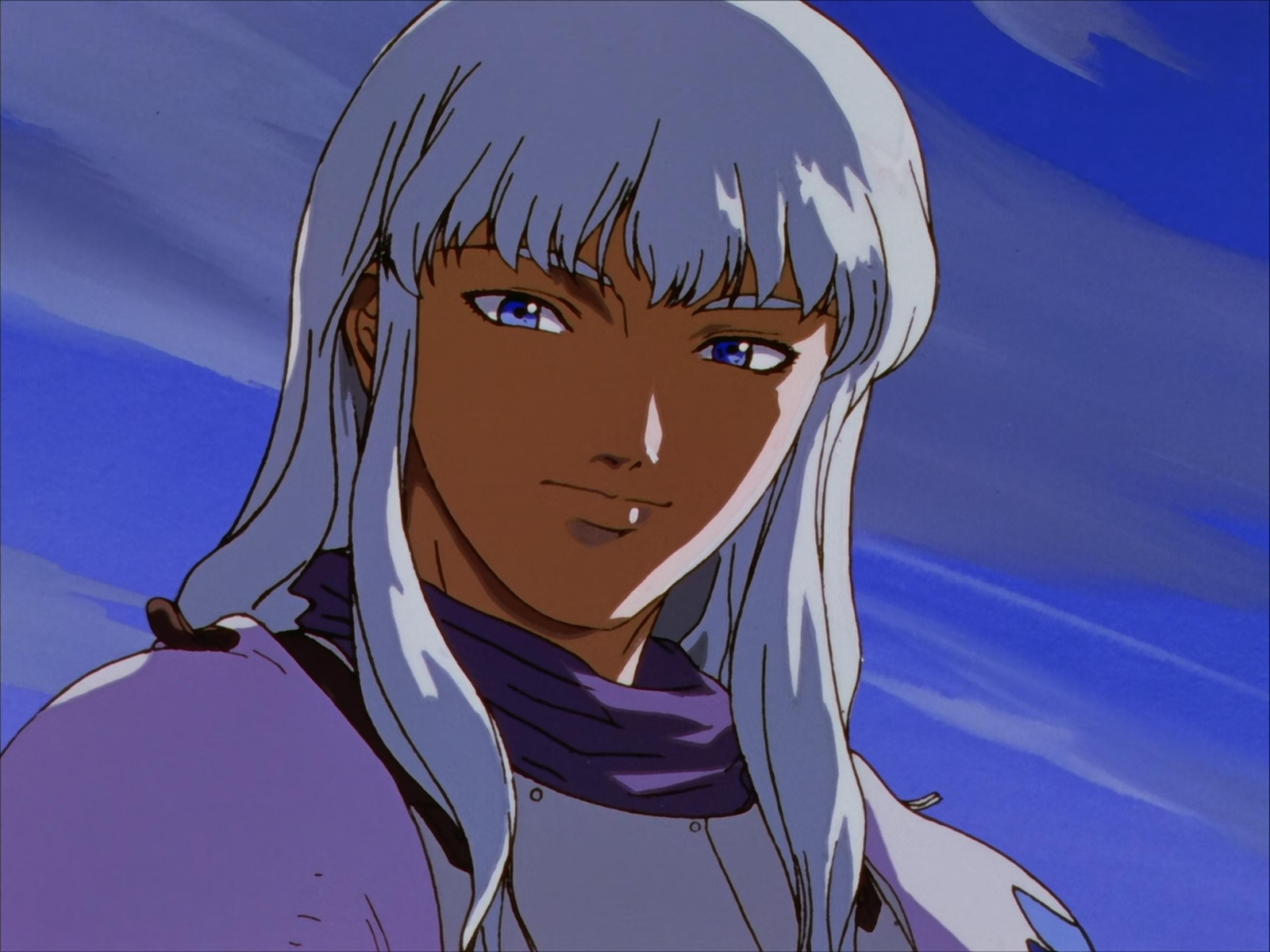
If you’ve spent more than fifteen minutes in anime discourse, you’ve encountered the take. Usually delivered with a smirk, sometimes with genuine conviction, occasionally with the kind of philosophical confidence that suggests the speaker just discovered Nietzsche last semester: “Griffith did nothing wrong.”
It’s the Berserk fandom’s most reliable conversation starter, a statement engineered to provoke exactly the response it receives. Fans have been arguing about Griffith’s actions at the Eclipse for decades now, dissecting his motivations with the intensity of rabbinical scholars debating Talmudic law. Was his dream worth the sacrifice? Did he have a choice? Can we really judge someone operating under cosmic determinism?
Here’s the thing, though: Berserk isn’t asking you to debate whether Griffith was justified.
The story already answered that question. Loudly. With visceral horror and 300+ chapters of consequences. The real tragedy isn’t that fans can’t agree on Griffith’s morality—it’s that by framing the Eclipse as a trolley problem, they’re missing what Kentaro Miura actually built.
The Dream Worth Dying For (Except Someone Else Does the Dying)
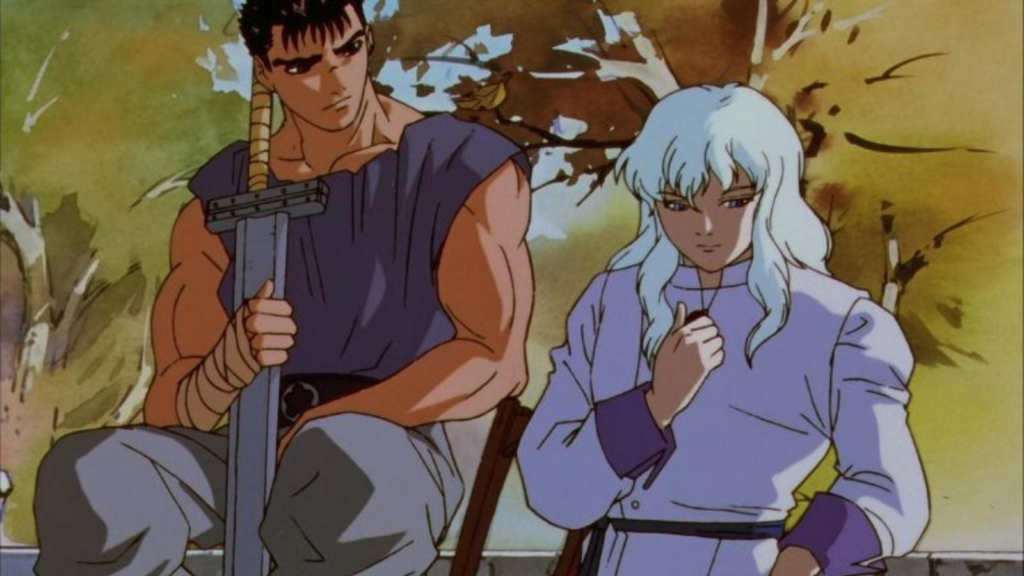
Understanding why “Griffith did nothing wrong” exists as a take requires understanding what Griffith represents before everything goes to hell. He’s not just ambitious—he’s transcendently ambitious, the kind of character whose dream feels less like a goal and more like a gravitational force pulling everyone into orbit.
The Golden Age Arc spends years establishing this. Griffith doesn’t just want a kingdom; he wants to earn one, to climb from nothing to everything through sheer force of will and strategic brilliance. There’s something genuinely compelling about that vision, especially when contrasted against the inherited power and casual cruelty of Midland’s nobility. Griffith makes his dream feel like destiny itself.
And he’s good at it. Devastatingly good.
Every tactical decision, every political maneuver, every sacrifice he demands from his followers—they all seem to work. The Band of the Hawk doesn’t just follow Griffith; they believe in him with religious fervor. When he tells them their deaths will have meaning within his dream, they accept it. Not because they’re stupid, but because Griffith makes the impossible feel inevitable.
This is where the “did nothing wrong” take finds its foundation. If Griffith’s dream is grand enough, if his vision is pure enough, if the kingdom he builds will justify the cost—then maybe, just maybe, the Eclipse becomes a difficult but necessary choice. A leader making the hard call. The needs of the many outweighing the needs of the few.
Except that’s not what happens at the Eclipse.
Not even close.
When the Trolley Problem Has Teeth
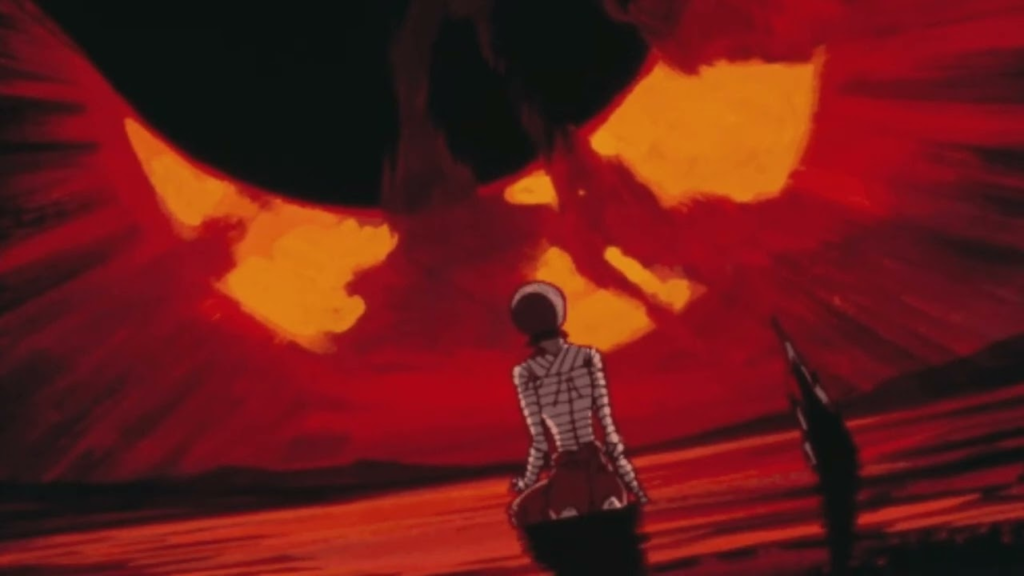
The Eclipse isn’t a philosophical thought experiment where Griffith weighs outcomes and chooses the greater good. It’s the moment where Griffith stops being human and becomes something else entirely—something that cannot make human choices because it no longer operates on human terms.
Context matters here. Griffith doesn’t invoke the Behelit at the height of his power, making a cold strategic calculation about acceptable losses. He does it broken, mutilated, stripped of everything that made him Griffith. His dream is ashes. His body is destroyed. His mind is fracturing under the weight of what he’s lost and what he can never become.
The Godhand doesn’t offer him a hard choice. They offer him an escape hatch from being human at all.
This is what the “nothing wrong” debate consistently misses: the Eclipse isn’t Griffith sacrificing the Band of the Hawk for his dream. It’s Griffith sacrificing himself—his humanity, his capacity for human connection, everything that made the dream meaningful in the first place—because he cannot bear to exist as a broken human who failed.
Watch what Femto does immediately after transforming. Not strategic military planning. Not kingdom building. Not advancing toward the dream that supposedly justified everything.
He assaults Casca while forcing Guts to watch.
That’s not a leader making difficult decisions. That’s something wearing Griffith’s face doing the cruelest thing imaginable because cruelty is all it has left. Femto doesn’t build Griffith’s kingdom; Femto creates a kingdom as a prop for his existence, a stage set built from human suffering because that’s what Godhand members do.
The Math That Doesn’t Add Up
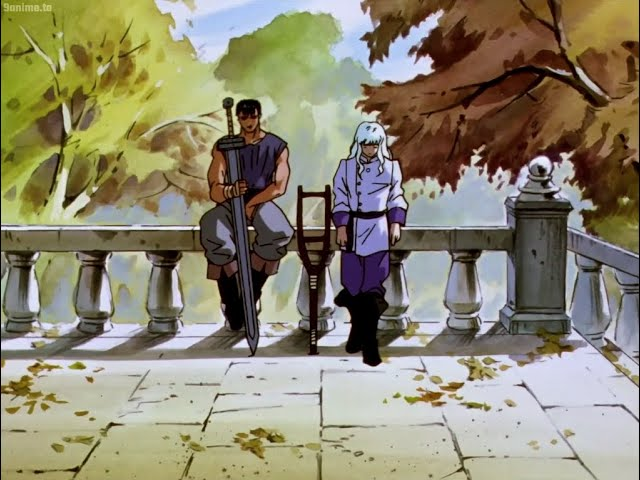
Let’s say we ignore everything about the transformation into Femto and judge Griffith purely on outcome-based ethics. Does the dream justify the sacrifice?
Miura spent 30+ years answering “no” through every panel he drew.
The kingdom Griffith eventually creates—Falconia—isn’t the earned dream he once envisioned. It’s a constructed reality that exists because Femto has the power to make it exist, populated by refugees who have no other choice, sustained by demonic power that feeds on human suffering. It’s less a kingdom and more a terrarium where Griffith keeps humans safe from the demons he helped unleash, a closed loop of manufactured salvation.
This is deliberate on Miura’s part. Falconia isn’t meant to be evaluated as a political success story. It’s meant to feel wrong, hollow, a simulation of Griffith’s dream that lacks the very element that made the dream meaningful: that it would be earned through human struggle and merit.
The refugees in Falconia don’t follow Griffith because he inspired them to greatness. They follow him because demons are eating their families and Griffith offers shelter. That’s not a kingdom built on human potential—it’s a protection racket with theological aesthetics.
And the cost? Miura doesn’t let you forget the cost. The Band of the Hawk didn’t just die; they died screaming, torn apart by demons, betrayed by the person they trusted most. Casca’s mind shattered. Guts lost his arm, his eye, and everyone he loved. Rickert—the youngest member who survived only because he wasn’t there—eventually slaps Griffith across the face when they meet again, the only human in the entire story who gives Griffith’s kingdom the moral evaluation it deserves.
One slap. No words. Just the physical manifestation of “this is not what we fought for.”
Causality Isn’t a Get-Out-of-Jail-Free Card
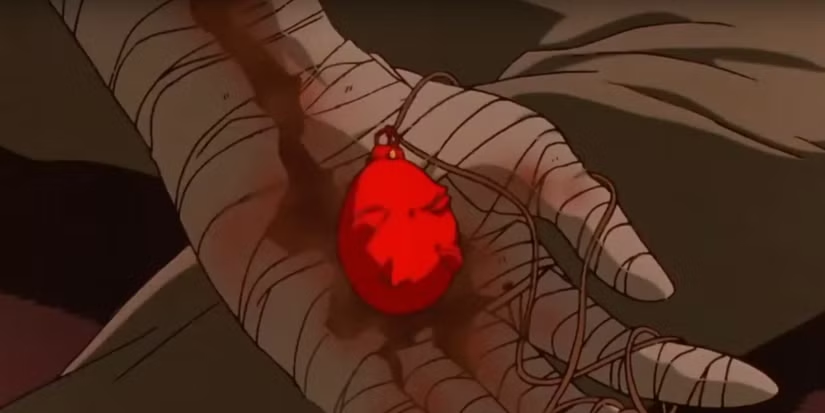
The strongest version of the “nothing wrong” argument pivots to determinism: Griffith was always going to do this. The Behelit chose him. Causality had already written this outcome. How can we judge someone for fulfilling their predetermined role?
Here’s where Berserk gets really interesting philosophically, because Miura doesn’t actually reject this premise. The Idea of Evil—the entity that creates Godhand members from human suffering—literally exists to give humanity the villains it unconsciously desires. Causality in Berserk is real, tangible, almost mechanical in its operation.
But Miura’s answer to determinism isn’t to excuse Griffith. It’s Guts.
Guts is the walking refutation of “causality made me do it.” He exists outside the predetermined flow, not because he’s chosen by fate but because he refuses to be. Every swing of the Dragonslayer is an act of defiance against a universe that insists his suffering is necessary and meaningful. He fights apostles, Godhand members, causality itself—not because he can win, but because surrendering to the predetermined outcome means accepting that Casca’s assault was “meant to be,” that his friends’ deaths “had to happen.”
The story isn’t subtle about this contrast. Griffith ascends by accepting his role in the cosmic script. Guts survives by rejecting the script entirely.
You can believe causality made Griffith’s choice inevitable and still recognize that the choice destroyed something irreplaceable. Determinism doesn’t erase morality in Berserk’s universe—it just makes moral choices more viscerally tragic because they cannot be avoided.
What Griffith Actually Lost
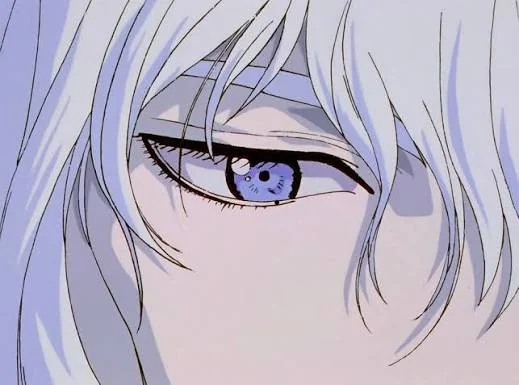
The Eclipse takes everything from Guts and Casca, but it takes something from Griffith too—something the “nothing wrong” take consistently fails to account for.
His humanity wasn’t a limitation he transcended. It was the only thing that made his dream worth pursuing.
Look at pre-Eclipse Griffith’s moments of genuine emotion: his breakdown after killing Julius, his panic when Guts leaves the Band of the Hawk, his self-destructive spiral after losing control. These aren’t flaws in an otherwise perfect ambition machine. They’re proof that Griffith’s dream mattered because it was pursued by someone capable of human connection, someone who could feel the weight of what he was building.
Femto doesn’t feel that weight. Femto doesn’t feel anything except perhaps mild amusement at human suffering. The creature that emerges from the Eclipse isn’t Griffith-plus-power; it’s a Griffith-shaped void that occasionally remembers it used to want a kingdom.
This is why Miura keeps showing us Casca’s perspective, why the manga returns again and again to the trauma of the Eclipse rather than moving on to “more important” plot points. The story isn’t asking you to weigh costs against benefits. It’s asking you to witness what was destroyed—the human connections, the earned loyalty, the meaning that comes from struggling alongside people who matter to you.
Griffith’s tragedy isn’t that he made a hard choice. It’s that he chose to stop being the kind of creature who could understand why the choice was wrong.
The Question Berserk Actually Asks
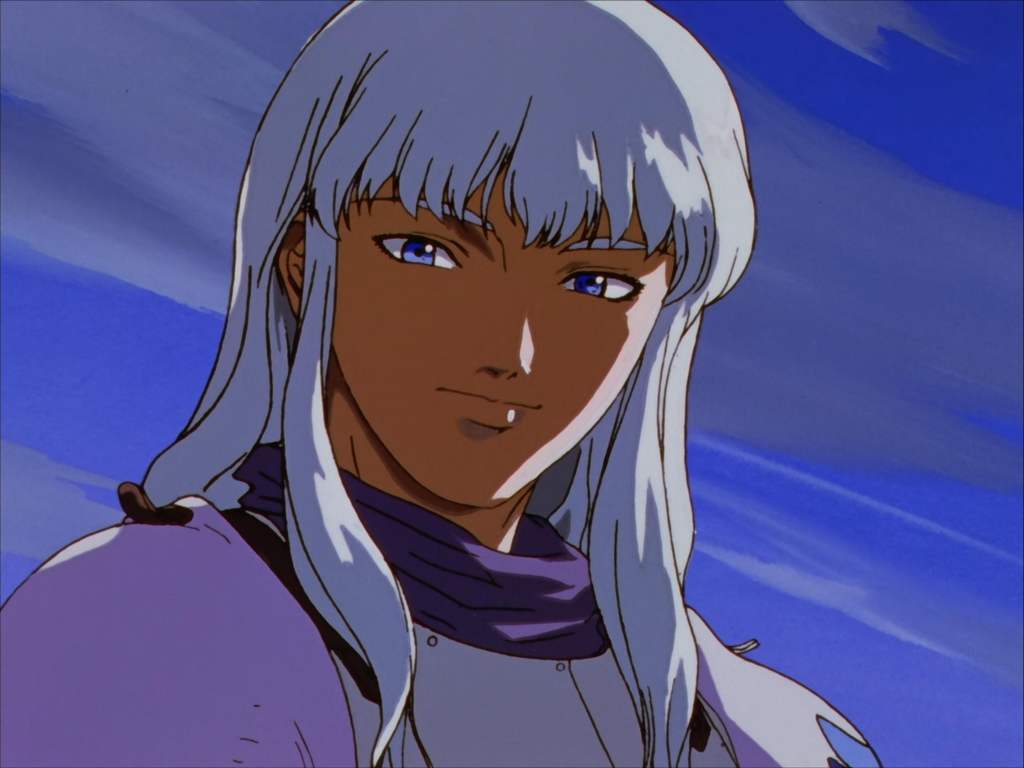
“Did Griffith do nothing wrong?” treats Berserk like a moral philosophy exam with a definitive answer. But Miura wasn’t writing a thesis defense—he was writing a tragedy about what happens when ambition becomes so consuming that it devours the human beneath it.
The story doesn’t need you to debate whether Griffith was justified. It needs you to feel the weight of what was lost: the Band of the Hawk laughing around campfires, Casca’s agency and selfhood, Guts’ ability to trust anyone, Griffith’s own humanity. It needs you to sit with the knowledge that some transformations are irreversible, that some prices are too high even if you get everything you thought you wanted.
The Eclipse isn’t a trolley problem. It’s a mirror showing us what we’re willing to sacrifice when we convince ourselves the dream justifies any cost. And the fact that fans still want to debate Griffith’s moral calculus—still want to frame his choice as potentially justifiable—suggests we’re all a little closer to activating our own Behelits than we’d like to admit.
That’s the point. Not whether Griffith was right or wrong.
But whether we’d recognize the moment we stopped being human enough to tell the difference.