

Most anime that wander into the moral minefield of bullying arrive with a comforting exit strategy. Someone apologizes. Someone cries. Someone grows. Credits roll, and the audience is gently assured that suffering is a temporary inconvenience on the road to self-improvement.
A Silent Voice never bothers building that exit.
Instead, it locks the door, turns off the lights, and lets the damage sit there with you—breathing, aging, and quietly shaping every interaction long after forgiveness is technically achieved. Redemption exists in this film, but only in the way a scar exists: visible, functional, and impossible to pretend wasn’t earned the hard way.
1. Shoya Ishida’s Apology Comes Too Late — And the Film Knows It
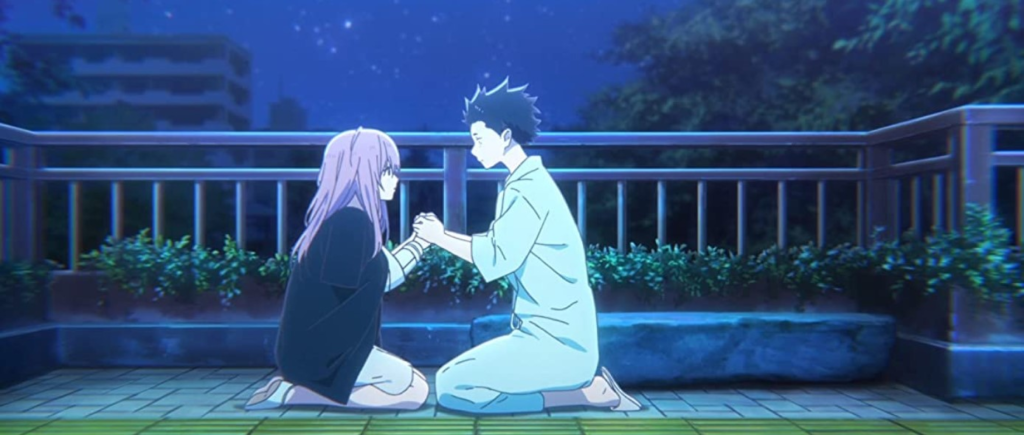
Shoya’s apology to Shoko Nishimiya is the emotional centerpiece everyone remembers. It’s also functionally useless.
By the time Shoya learns how to say “I’m sorry” without sounding like he’s performing for an invisible jury, Shoko has already absorbed years of institutional neglect and peer cruelty. The elementary school scenes—Shoya ripping out her hearing aids, classmates laughing while teachers look away with impressive consistency—aren’t framed as childhood mistakes. They’re framed as training exercises. Everyone involved is learning what society rewards and what it ignores.
The crucial moment isn’t when Shoya apologizes. It’s when Shoko instinctively apologizes back. Not because she’s guilty, but because she’s practiced. Her reflexive “I’m sorry” isn’t forgiveness—it’s muscle memory. The film treats this as a tragedy without swelling violins or inspirational speeches. Shoko has learned that peace is achieved by shrinking.
Shoya’s guilt doesn’t cleanse this. It merely joins the pile.
His social anxiety, visualized through the infamous blue X’s covering people’s faces, isn’t punishment; it’s residue. The film doesn’t suggest this will fade completely. Even after the X’s fall, Shoya hesitates. Eye contact remains a negotiation. Growth exists, but it limps.
2. Forgiveness in This Movie Is Administrative, Not Emotional
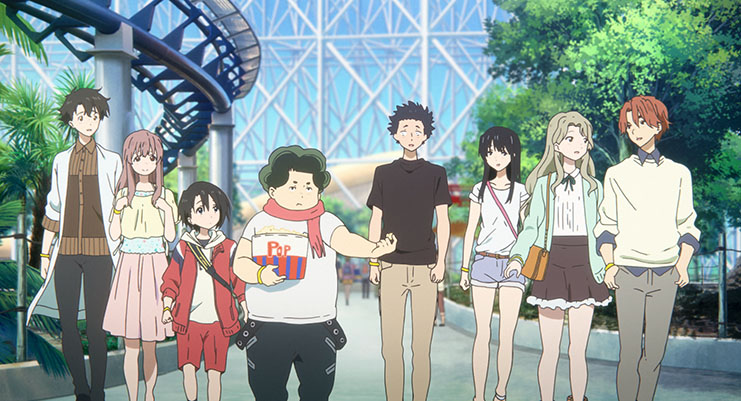
When the friend group finally confronts the past—Miyoko’s performative defensiveness, Naoka’s barely contained resentment, Tomohiro’s well-meaning cluelessness—the scene feels less like reconciliation and more like paperwork. Everyone signs off on moving forward, not because they’re healed, but because standing still is exhausting.
Naoka, in particular, becomes the film’s most honest character by accident. She refuses to transform into a better person on schedule. Her cruelty doesn’t soften into warmth; it mutates into civility. And the film never punishes her for this. There’s no karmic lightning bolt. She simply continues existing, which is arguably worse.
This refusal to moralize is deliberate. The story understands that people don’t evolve evenly, and damage doesn’t distribute itself fairly. Shoko’s attempted suicide isn’t framed as a climactic turning point that saves everyone else. It’s framed as a failure of the group to recognize that apologies don’t reverse internalized worthlessness.
When Shoya saves her, it isn’t redemption—it’s triage.
3. Japan’s Silence Culture Is the Real Villain (And It Never Leaves the Room)
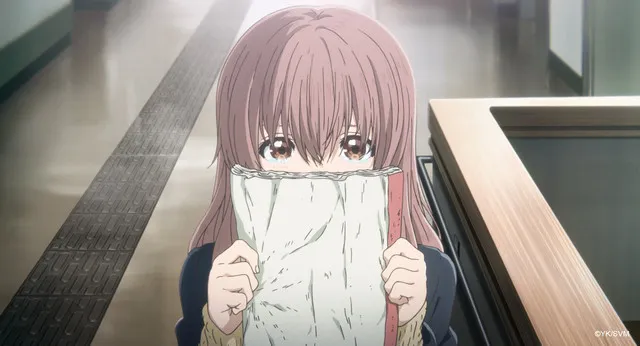
Bullying in this film doesn’t happen in a vacuum; it thrives in a system allergic to confrontation. Teachers deflect responsibility with procedural language. Administrators prioritize order over accountability. Classmates learn that blending in is safer than intervening.
This reflects a broader social reality in Japan, where harmony is often maintained by omission rather than resolution. The film quietly indicts this structure by showing how efficiently blame travels downward. Shoya becomes the scapegoat not because he was uniquely cruel, but because someone had to absorb the consequences so the system could continue functioning without self-examination.
The adult world offers no solutions, only delayed reactions. By the time authority intervenes, the damage has already settled into everyone’s posture. The message is bleak but precise: silence doesn’t prevent harm; it just distributes it unevenly.
And once internalized, it doesn’t go away.
Conclusion: Healing Happens, Damage Stays
A Silent Voice does something most anime avoid—it allows healing to coexist with permanent loss. Characters improve, relationships stabilize, and life continues, but nothing resets. No one returns to who they might have been.
The film’s quiet cruelty lies in its honesty: some wounds close, others become load-bearing. Forgiveness helps people move forward, not backward. And sometimes the best outcome isn’t redemption—it’s learning how to live with what never fully heals.
Which, inconveniently, feels a lot like real life.