

Berserk opens with a demon. It ends conversations with a demon. The entire visual identity of the manga is built on grotesque apostles, impossible creatures, and a world so saturated in supernatural horror that you’d be forgiven for thinking the supernatural is the point.
It isn’t.
Strip away every demon Guts has ever cleaved in half, and the wounds that actually define him were all inflicted by people. Ordinary, breathing, entirely human people. That distinction is what makes Berserk one of the most psychologically precise works in the medium — and what makes Guts one of the most uncomfortably real protagonists in fiction.
Born Into Cruelty Before He Could Speak
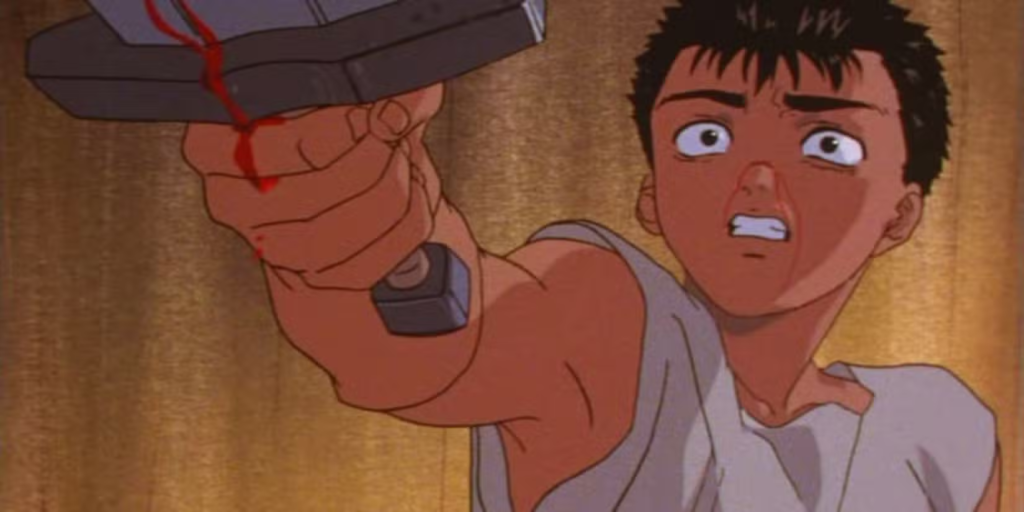
Guts didn’t get a tragic backstory. He got a tragic origin.
He was born beneath a hanging tree from the corpse of his executed mother, pulled out of death before he could take his first breath. The mercenary group that found him treated his survival as an omen. Bad luck in human form. His adoptive mother Sys showed him genuine warmth, and she died of plague while he was still a small child. The universe, operating through entirely mundane mechanisms, handed him abandonment twice before he was old enough to process either one.
Then came Gambino.
His adoptive father sold him to a man named Donovan for a single night. No apostles. No cursed brand. Just a transaction between two adults who decided a child’s body had a price. The scene is one of the most disturbing in the manga precisely because Miura doesn’t dress it in supernatural clothing. There’s nothing to fight. There’s no demon to behead. There is only the specific, unglamorous horror of what humans do to children when no one is watching.
Guts killed Gambino after Gambino tried to kill him first. He was around eleven or twelve years old.
This is the wound that everything else is built on. Not the Eclipse. Not the Brand of Sacrifice. This.
The Eclipse Was a Human Betrayal Wearing a Supernatural Costume
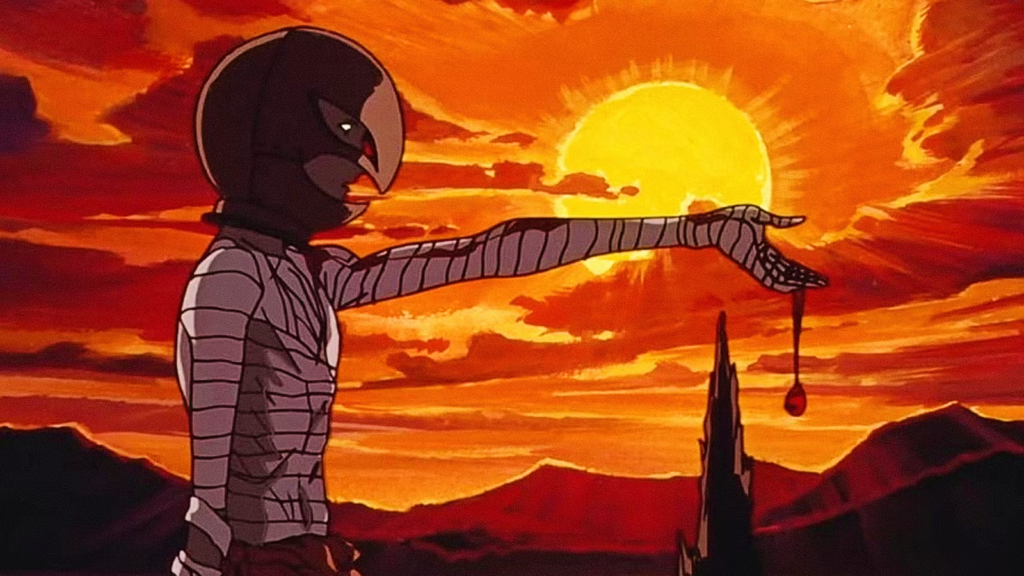
The Eclipse is Berserk’s most iconic moment, and it is genuinely harrowing. But think carefully about what actually happened.
Griffith — a human being who grew up in poverty and clawed his way to power through brilliance, charisma, and ruthless ambition — chose to sacrifice everyone he had ever called a comrade in exchange for his dream. The God Hand didn’t trick him. The Crimson Behelit didn’t possess him. He made a choice. A coherent, deliberate, deeply human choice rooted in ego and desperation after a year of imprisonment broke him down to nothing.
The apostles at the Eclipse are grotesque, yes. But the act of betrayal — of treating the people who loved you as acceptable collateral — that’s not supernatural at all. That’s something humans have been doing to each other since before recorded history.
What makes the Eclipse so devastating for Guts isn’t the physical horror. It’s that his closest friend looked at him and decided his life wasn’t worth the cost of giving up. After a childhood defined by adults who treated him as disposable, the one relationship Guts had built his entire identity around turned out to be the same story with better production value.
The Brand of Sacrifice is just the receipt.
How Guts Copes — and Why That’s the Most Accurate Part
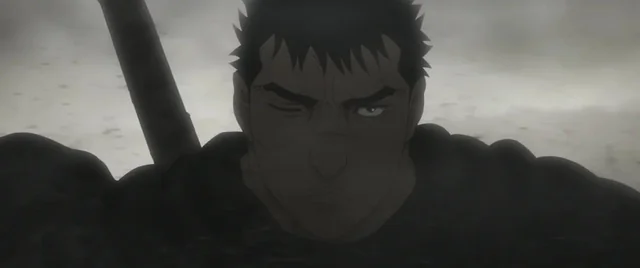
After the Eclipse, Guts spends two years as the Black Swordsman, hunting apostles in increasingly suicidal ways. It looks like revenge. It functions like self-destruction.
This is not a coincidence. Miura was depicting something that trauma psychology has documented extensively: the way survivors of severe trauma often pursue situations that recreate the original wound. Not because they want to suffer, but because mastery over a version of the original horror feels like the closest thing available to resolution. Guts can’t go back and kill Donovan before the damage is done. He can’t resurrect the Band of the Hawk. But he can find the closest available proxy and destroy it, over and over, until his body gives out.
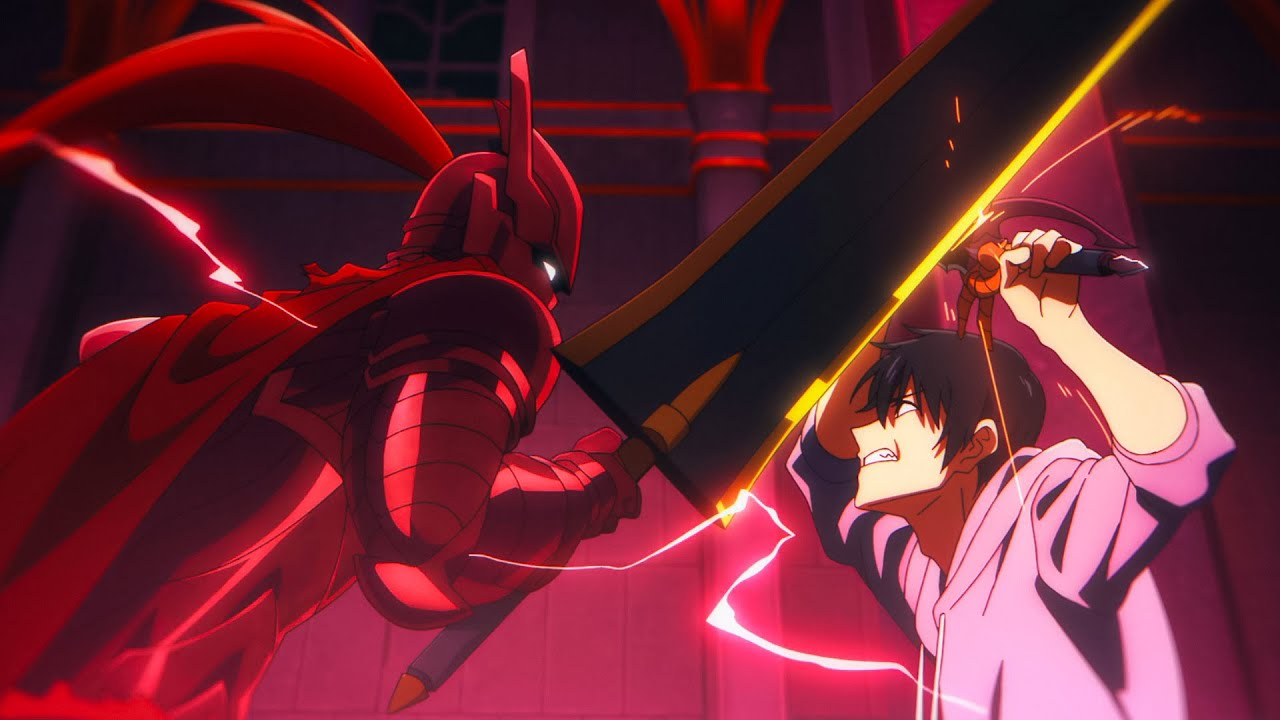
The Berserker Armor makes this literal. It overrides his pain receptors and lets him keep fighting past the point of physical survival. It is, mechanically, a metaphor for dissociation — the psychological defense of detaching from your own body to endure what would otherwise be unbearable. Guts wears his coping mechanism as armor. The blacksmith Godot forged the Dragon Slayer as a massive slab of iron theoretically capable of killing dragons — a weapon so absurd it was never meant to be used. Guts made it his primary tool. He is, on every symbolic level, a man who turned his damage into his identity because there was nothing else left to turn it into.
It’s a little funny if you think about it. It’s mostly just sad.
The World That Shaped This Story
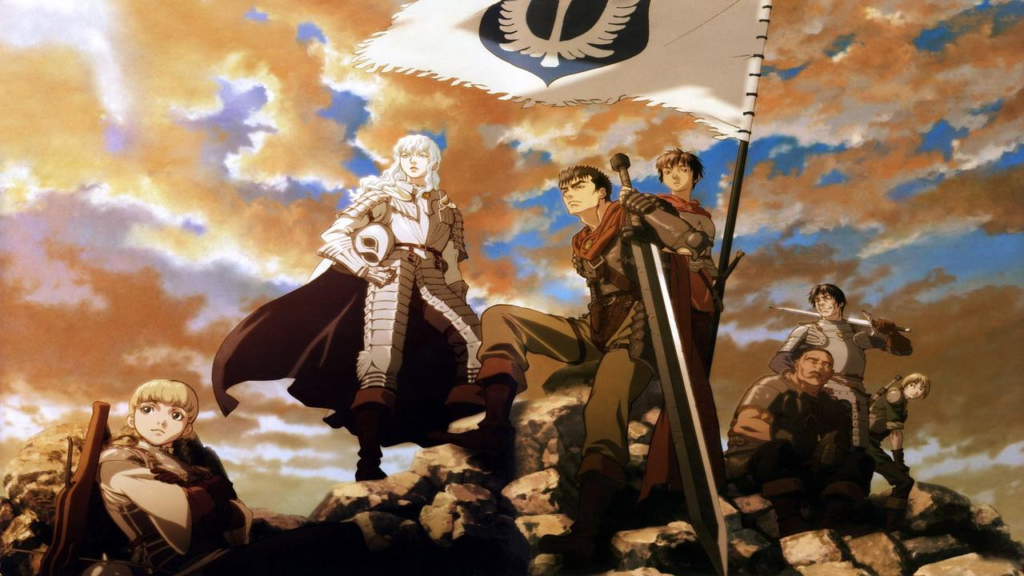
Kentaro Miura began serializing Berserk in 1989, at the peak of Japan’s economic bubble, just before it catastrophically collapsed. The Japan Miura lived in — brutal, hierarchical, where the powerful consume the weak without apology and the concept of a meritocratic dream is a beautiful lie that destroys everyone who believes it — was not invented from nothing. It was observed.
The Band of the Hawk is a story about talented people who give everything to an exceptional leader’s vision and discover that the vision was never about them. That dynamic was playing out in corporate Japan in real time, in a culture that demanded total self-sacrifice for institutional loyalty and offered broken promises in return. Griffith didn’t emerge from a fantasy vacuum. He was distilled from a recognizable archetype.
Miura spent decades building this world with near-obsessive precision. His hiatus periods were long and frequent enough to become a cultural punchline, but looking at any single chapter of the manga makes the reason obvious. Every panel is constructed. Nothing is careless. The trauma Guts carries is rendered with the same attention as the demonic architecture surrounding him — because to Miura, they were the same category of thing. Both were products of a world that operates without mercy and calls it natural order.
The Demon Is Always Human First
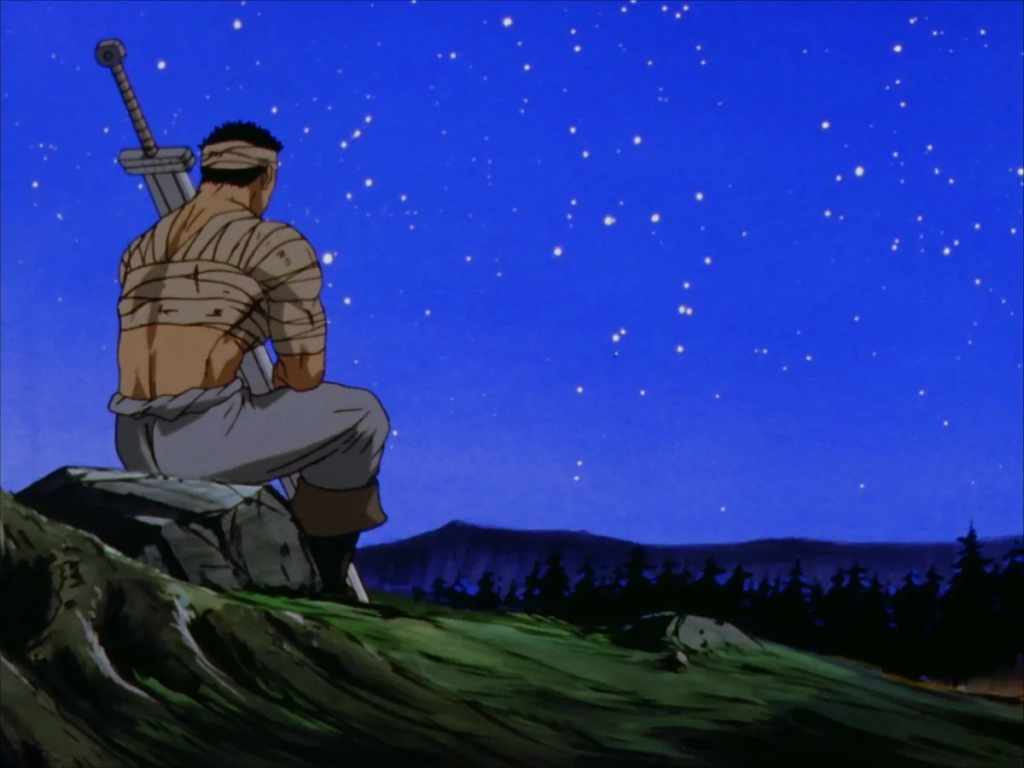
Berserk is a manga about a man with a giant sword fighting monsters. It is also, inescapably, a story about what happens to a person when every institution that should have protected them fails — or actively exploits them — from the moment of birth.
The supernatural elements are extraordinary. But the trauma is ordinary. That’s the point.
Guts doesn’t need the Eclipse to explain why he is the way he is. The Eclipse just confirmed what he’d already been taught, repeatedly, by entirely ordinary human beings: that he was born to be used, and survival was something he’d have to manage entirely alone.
The demons are almost a comfort. At least you can kill them.