

Historia Reiss became queen because she was the last surviving member of the legitimate royal bloodline — and because Levi Ackerman made it very clear she was going to accept that fact.
No vote. No platform. No public debate about whether a teenager with a traumatic backstory and zero administrative experience should hold the highest office on the island. Just royal blood, a very short and very dangerous man, and a foregone conclusion.
Attack on Titan is obsessed with freedom. It’s practically the series’ thesis statement. But somewhere between all the screaming about freedom and all the titans eating people, the show quietly builds one of anime’s most detailed portraits of a society that has structurally made free governance nearly impossible — and then watches what happens.
The Coup That Nobody Voted For
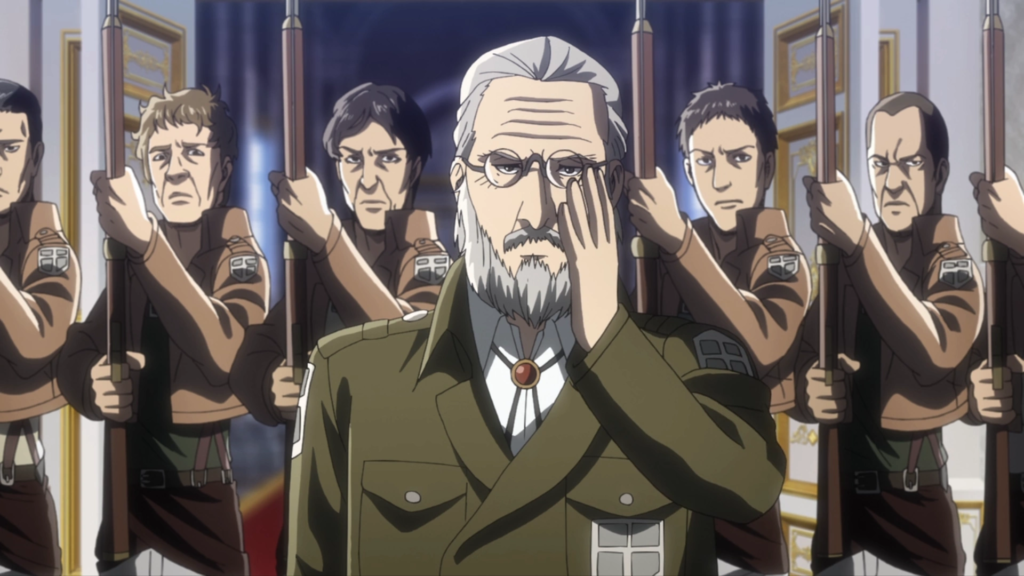
When the military dismantles the Reiss family’s puppet government in Season 3, it’s framed as liberation. And emotionally, it works. The old government was corrupt, memory-wiping the population and deliberately keeping humanity weak. Getting rid of it feels righteous.
But pause on the mechanics. The overthrow was orchestrated collectively by Dhalis Zachary — commander-in-chief of all three military branches — alongside Erwin Smith of the Survey Corps and Dot Pixis of the Garrison. A coalition of military leaders, none of them elected, none of them accountable to any civilian body, removes a sitting government and installs a new head of state based on bloodline legitimacy.
The civilian population of the Walls gets absolutely no say in any of this.
Zachary would go on to govern Paradis for several years before being assassinated by the Yeagerists — a bomb hidden in a chair, which is darkly fitting for a man who sat at the top of an unelected power structure. What replaces him isn’t democratic institutions. It’s a radicalized military faction.
This isn’t a glitch in the story. It’s the whole point.
The Founding Titan Is Just the Propaganda Ministry With Extra Steps
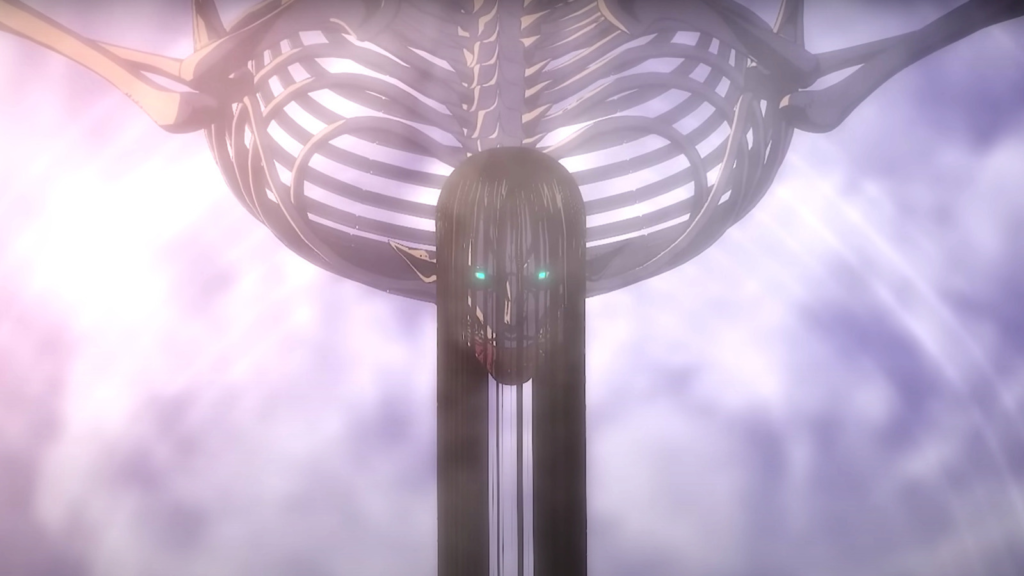
Here’s the structural problem that makes Paradisian democracy not just difficult but deeply compromised: the Founding Titan’s power includes the ability to alter the memories of every Eldian on the island.
That’s not a metaphor. That’s the literal plot mechanism that kept the Walls functioning for a century.
An informed electorate requires, at minimum, an electorate with accurate memories. Paradis didn’t have that. The original king Karl Fritz used the Founding Titan to erase knowledge of the outside world and suppress Eldian history. The broader population’s pacifism was maintained through propaganda and selective memory erasure — while the Vow Renouncing War bound royal inheritors of the Founding Titan itself, constraining how the power could even be used. The entire system was layered: ideological control at the top, manufactured ignorance everywhere else.
Every political institution that developed inside the Walls — the Military Police, the Garrison, the Survey Corps — evolved inside a deliberately falsified information ecosystem, responding to titans and a false history simultaneously.
There’s no free press when the head of state can literally rewrite what the press remembers.
What makes this so quietly disturbing is how recognizable it is. Isayama was writing Attack on Titan through the 2010s, a period when Japanese political discourse was defined by decades of single-party LDP dominance, a deeply passive electorate, and national debates about “defensive” military posture rooted in post-WWII guilt and constitutional restrictions. A sealed island nation, surrounded by a world that hates it, governed by institutions that depend on civilian ignorance — the allegory doesn’t require much squinting.
What Eren Yeager Looks Like With a Functioning Senate
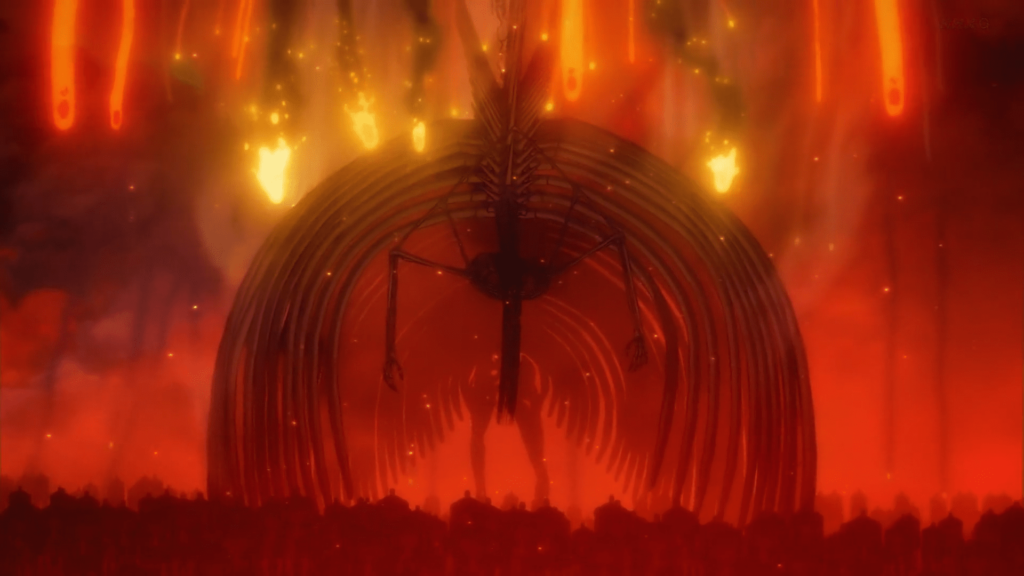
Eren’s radicalization is the emotional core of the final arc, and it’s genuinely sophisticated writing. But trace it back to its roots, and it’s a story about what happens when a citizen has no legitimate political outlet.
Eren discovers the truth about the world — Marley, the global persecution of Eldians, the centuries-long lie — with no institutional mechanism to process or respond to that information. There’s no parliament to petition. No free election where candidates debate Marleyan foreign policy. No civil society organizations, no free press running investigative pieces on the Tybur family’s political maneuvering.
There’s just him, alone with catastrophic knowledge and no democratic infrastructure to absorb it.
So he does what people throughout history have done when legitimate channels don’t exist or don’t work: he radicalizes. He builds a cell. He acts unilaterally on behalf of a population that never asked him to.
The Rumbling — the genocide of 80% of humanity — was never put to a public vote. Not in Paradis, not even to the members of the Survey Corps who ostensibly shared Eren’s goals. He simply decided. One person, with inherited biological power, making a civilizational choice for hundreds of thousands of people who were never consulted.
That’s not a villain origin story. That’s what unchecked executive power looks like at scale.
Historia, the Good Queen Who Does Nothing
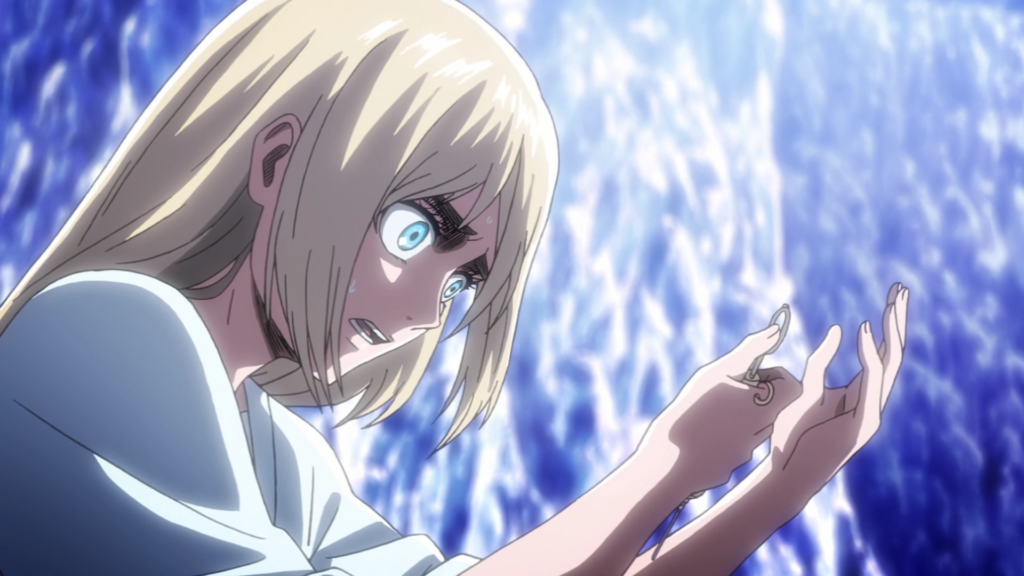
Historia Reiss is one of the series’ most beloved characters, and also one of its most telling political symbols. She’s compassionate, she survived her family’s erasure of her identity, and she genuinely cares about the people inside the Walls.
She also has no visible political power for the entirety of her reign.
By the final arc, Historia is pregnant — the circumstances of which carry their own troubling political undertones — and is being used as a living argument against Zeke Yeager’s euthanasia plan. Her body becomes a political instrument before she has a chance to govern as a political actor. The queen who was supposed to represent a break from the manipulative Reiss dynasty ends up being… managed. Gently, by people who care about her. But managed.
A democracy doesn’t just need an elected leader. It needs institutions, checks, accountability structures that exist independent of whoever holds power. Paradis never built those. It got rid of one authoritarian system and replaced it with a gentler, more sympathetic one. The gentleness is real. So is the authoritarianism.
The Walls Were Always the Problem
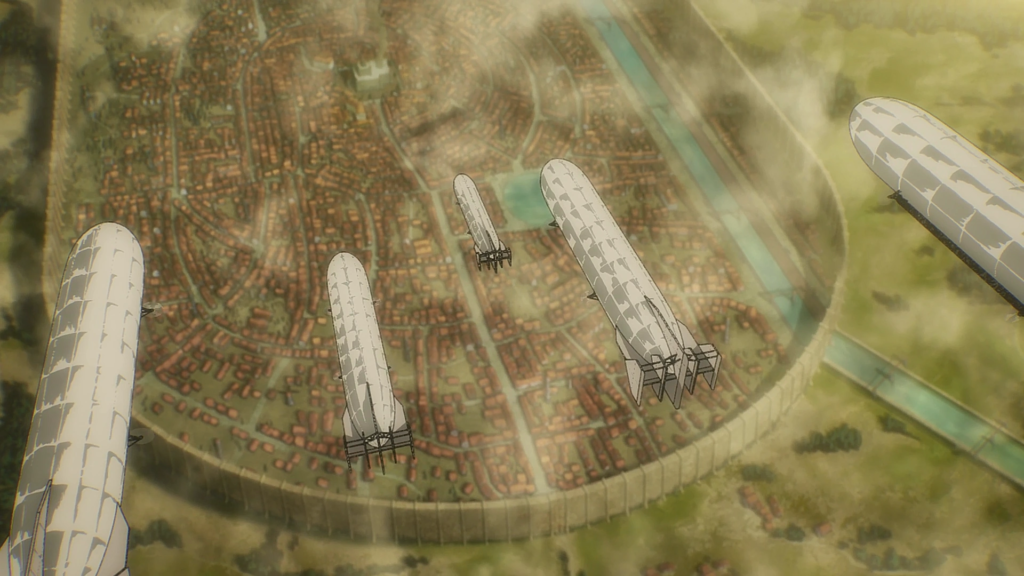
What Attack on Titan ultimately argues — probably not entirely on purpose, which makes it more interesting — is that Paradis was never a society with the infrastructure to choose its own future. The physical walls mirrored the political ones. Karl Fritz didn’t just build structures to contain titans. He built structures to contain politics itself.
Real democracy requires time, accumulated institutions, a literate and informed public, and crucially, the ability to make catastrophically wrong decisions and survive them. Paradis had none of those buffers. Every wrong decision was potentially an extinction event. The result was a society permanently in crisis mode, where military logic always trumped civic logic because there was literally no space for anything else.
The tragedy of Paradis isn’t Eren. It isn’t even the titans.
It’s that by the time anyone had enough information to vote meaningfully on their own future, the future had already been decided for them.