

There’s a reason Chainsaw Man feels like it’s laughing at you while bleeding out on the floor. It isn’t random. It isn’t edgy for sport. And it definitely isn’t just violence-as-aesthetic. Beneath the chainsaws, vomit kisses, and sudden character funerals is a quieter, nastier thesis: most people want things they don’t understand, and they want them so badly they’ll let anyone sell them a leash.
This isn’t a story about dreams. It’s about the danger of having no idea why you want what you want—and still chasing it like a starving dog.
Denji: Desire Without Language
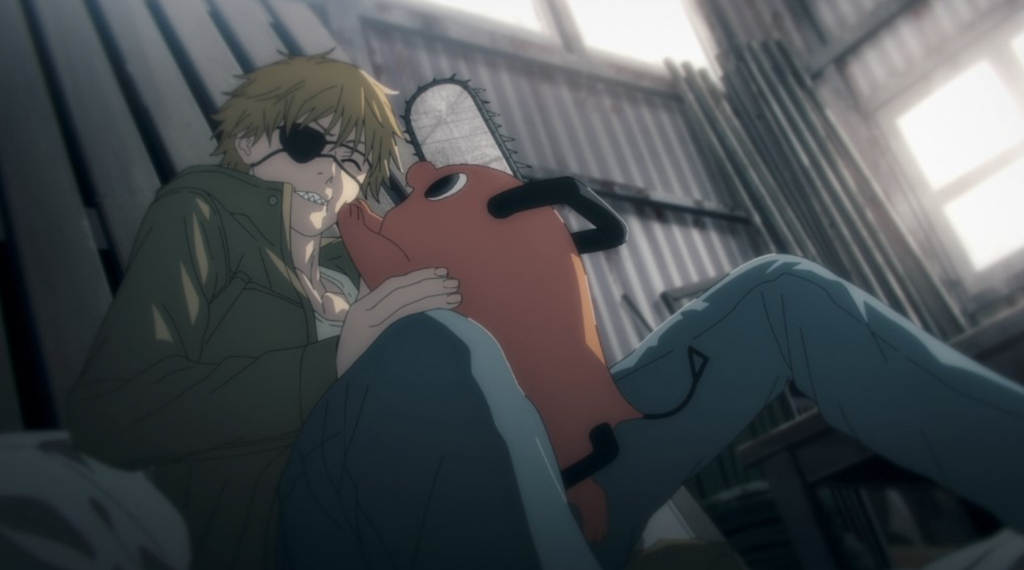
Denji doesn’t have goals. He has urges. That difference matters.
When he says he wants toast with jam, a girlfriend, or a normal life, it’s not aspiration—it’s vocabulary theft. These are borrowed desires, scavenged from ads, passing comments, and the vague idea of happiness sold by people who’ve never had to trade organs for rent.
Early on, Denji admits—without drama—that he doesn’t really know what “normal” means. That confession is more revealing than any tragic backstory. He isn’t chasing fulfillment; he’s chasing shapes. Whatever looks like it might fill the hole gets thrown inside, whether it’s Makima’s smile or the promise of touching a chest like it’s a sacred artifact.
The infamous Power breast-touch scene lands precisely because it collapses. There’s no angelic choir, no awakening. Just Denji realizing that the thing he wanted wasn’t the thing he thought it was. The moment doesn’t mock him—it indicts the idea that desire automatically contains meaning.
Denji isn’t shallow. He’s illiterate in wanting. And nobody teaches him to read.
Makima: The Salesperson of Meaning

Makima doesn’t control Denji through fear. She controls him through clarity—or the illusion of it.
She always seems to know what she wants. Career. Order. A better world. The confidence alone is intoxicating. When someone who has nothing meets someone who appears to have direction, obedience feels like romance.
Makima’s manipulation works because she offers Denji a script. Eat well. Work hard. Be good. You’ll be happy. It’s the same promise that keeps entire economies running while quietly grinding people down to polite despair.
Her calm demeanor isn’t kindness; it’s branding. She never raises her voice because she doesn’t need to. Systems don’t scream. They just process.
And when Denji finally understands the cost of letting someone else define your desires, it’s too late for redemption but just early enough for comprehension. Which is worse. Awareness arrives like a receipt you didn’t know you were signing for.
Power and Aki: The Lie of “Better” Wants

Power wants status. Aki wants revenge. Both seem more sophisticated than Denji’s grocery-list dreams, and both collapse just as brutally.
Power’s arc strips ambition down to instinct. When faced with genuine loss, her grandiosity evaporates. What remains isn’t nobility or growth—it’s terror. The desire to survive. The desire to be held. Her lies were armor, not ambition.
Aki is more tragic because his desire looks respectable. Revenge is socially legible. It comes with uniforms, speeches, and approval. But it hollows him out anyway. The future he imagines—quiet domesticity, snow falling gently—isn’t a goal he chose. It’s a fantasy he borrowed to justify continuing.
When that future becomes impossible, there’s no backup plan. Just the realization that years of pain were invested into an ending that never belonged to him.
Chainsaw Man doesn’t punish characters for wanting bad things. It punishes them for mistaking borrowed narratives for personal truth.
Hell Isn’t Fire — It’s Consumption
The Hell sequences aren’t terrifying because of darkness or gore. They’re terrifying because of scale and indifference.
Devils don’t rage. They don’t moralize. They consume because consumption is what they are. No justification needed. No backstory required.
That’s the joke hiding inside the horror: devils don’t pretend their desires are virtuous. Humans do.
When the Gun Devil’s devastation is quantified in seconds and body counts, it mirrors how real-world violence is often processed—not as tragedy, but as data. Desire stripped of empathy becomes logistics.
Which brings us to the uncomfortable part.
Why This Story Could Only Exist Now
Chainsaw Man is steeped in the anxiety of late-stage economic fatigue. The story doesn’t scream about capitalism; it yawns under it.
Denji’s poverty isn’t dramatic. It’s administrative. Debt passed down like a curse with paperwork attached. His dreams are small because the system never taught him to imagine larger ones safely. Want too much, and you become ridiculous—or disposable.
Public Safety operates like a corporate bureaucracy with monsters instead of memos. Promotions come with body bags. Loyalty is rewarded with proximity to power, not protection. The horror isn’t supernatural; it’s institutional.
In a world where young people are told to “find their passion” while being priced out of stability, Denji’s confusion isn’t stupidity—it’s accuracy. Wanting something you don’t understand is practically a survival strategy when understanding offers no shelter.
Fujimoto’s Cruelest Trick
The cruelty of Chainsaw Man isn’t that characters die suddenly. It’s that meaning arrives late.
Understanding follows desire like an autopsy follows a crime—thorough, precise, and useless for prevention.
By the time Denji learns how to choose what he wants, he’s already become something shaped by other people’s needs. Freedom, when it finally appears, doesn’t look triumphant. It looks quiet. Suspicious. Earned through loss rather than victory.
Which is maybe the most honest ending possible.
Final Thought
Chainsaw Man isn’t asking what you want.
It’s asking who taught you to want it—and what they’re getting in return.
And if that question makes you uncomfortable, congratulations. That means it’s working.