
Most stories treat mentorship like a vending machine—insert troubled protagonist, receive wisdom, output better person. Anime has never been that polite. The best shows understand that handing someone knowledge doesn’t heal them, and sometimes the person teaching you is drowning themselves. They just hide it better.
Here are five anime that refuse to pretend mentorship is clean, redemptive, or even helpful. These relationships are parasitic, codependent, built on lies, or straight-up abusive. And somehow, they’re also completely sincere.
Hunter x Hunter: When Your Dad Is the Lesson
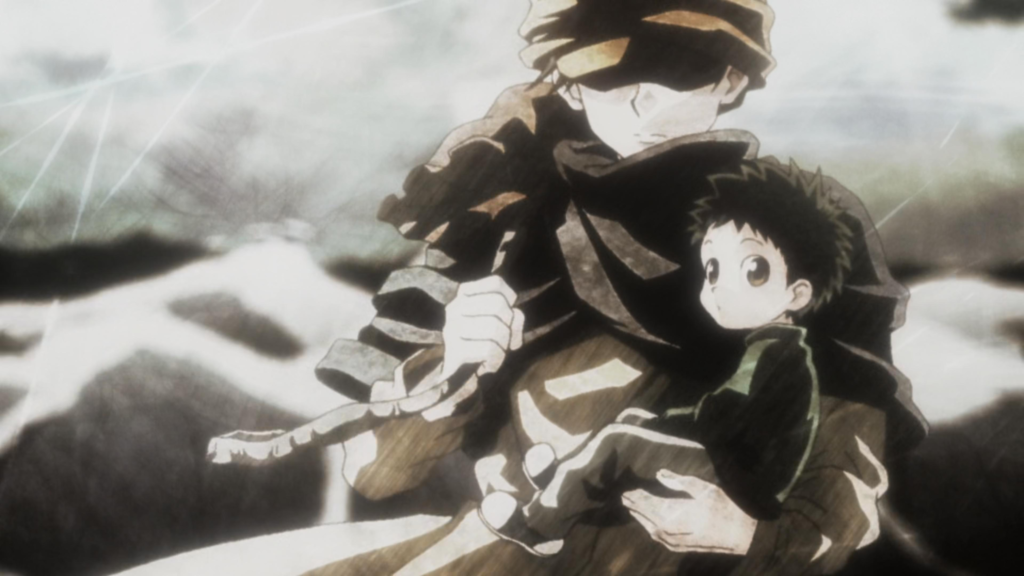
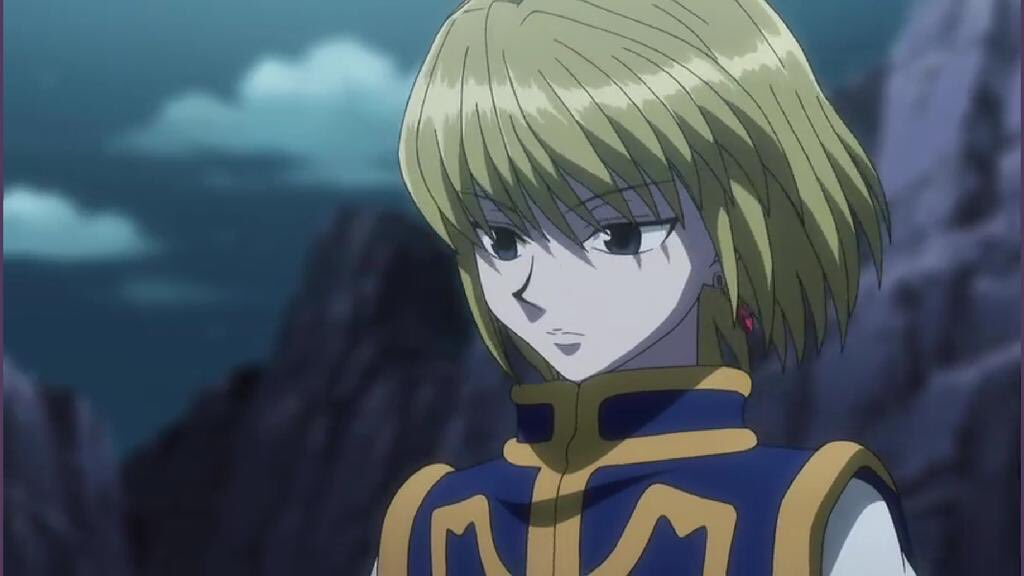
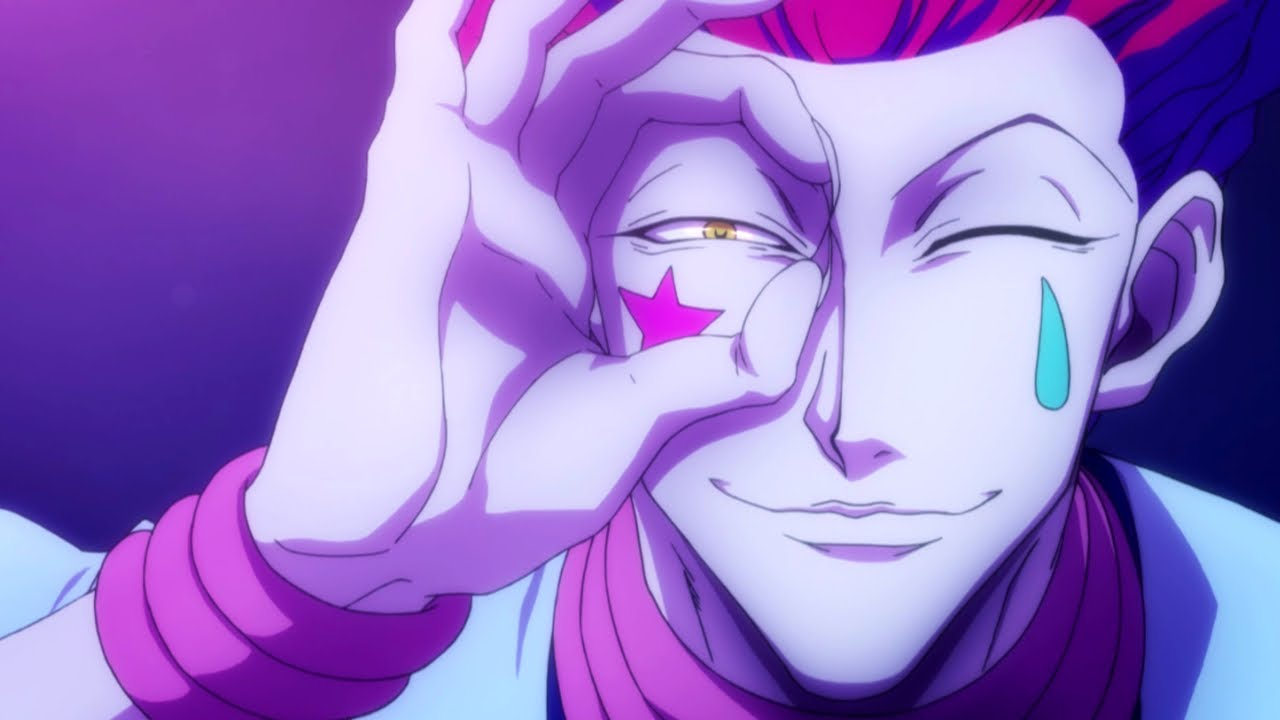
Gon Freecss spends the entire series chasing a father who explicitly abandoned him to play hide-and-seek across continents. Ging Freecss is not a deadbeat—he’s a successful deadbeat, which is worse. He didn’t leave because he failed. He left because he wanted to, and the world rewarded him for it.
The show doesn’t frame this as tragic backstory fuel. It frames it as Gon’s operating system. Every decision he makes is downstream from a twelve-year-old deciding his worth is conditional on proving himself to someone who doesn’t care. When Gon nearly kills himself transforming against Pitou, it’s not heroism. It’s what happens when you teach a kid that love is something you earn by suffering beautifully.
Ging’s “mentorship” is a genre of neglect so advanced it looks like philosophy. He structures Greed Island as a game where Gon has to solve puzzles just to have a conversation with him. Imagine your father making you complete a battle royale before he’ll answer a phone call. The show presents this as Ging being “difficult” or “eccentric.” It’s child abandonment with better graphics.
And here’s the kicker: Gon still idolizes him. Even after everything—after Kite, after the Chimera Ant arc nearly erases him from existence—he tells Ging he’s glad he became a Hunter just to meet him. It’s not character growth. It’s Stockholm syndrome with a license.
What makes this mentorship complicated isn’t that Ging is cruel. It’s that he’s effective. Gon becomes extraordinary because he was raised to believe he had to be. The toxicity worked. That’s the nightmare.
Naruto: Generational Trauma as Curriculum
The entire shinobi system runs on the principle that if you survive being traumatized by your teacher, you earn the right to traumatize the next generation. It’s hazing with kunai.
Kakashi is the franchise’s poster child for “mentorship as emotional unavailability.” He teaches Team 7 the bell test—a exercise designed to fail unless they break the rules—then spends the next several years letting them nearly die because “they need to grow.” When Sasuke defects, Kakashi carries the guilt, but the show moves on faster than he processes it, and he returns to his default state: vaguely present but emotionally AWOL.
But Kakashi learned this from somewhere. Minato was kind but distant, shaped by Jiraiya, who was charismatic but fundamentally lonely, shaped by Hiruzen, who was wise but cowardly when it mattered. Every mentor in this lineage teaches the same lesson: care about people, but never enough to dismantle the system killing them.
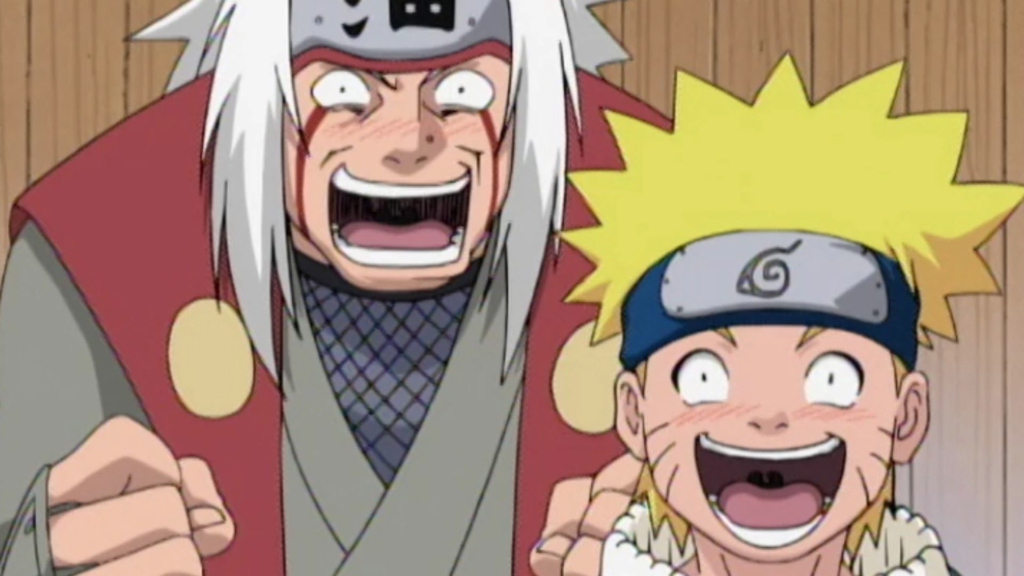
Jiraiya’s relationship with Naruto is particularly ugly if you stop squinting. He’s a fifty-year-old man who disappears for years, shows up drunk, trains Naruto in between peeping on women, then dies before the kid’s even processed what mentorship should look like. He eventually reveals crucial information about Naruto’s parents and the Nine-Tails, but only when the plot demands it—never early enough to prevent years of isolation and confusion. The show frames his behavior as lovable perversion. It’s neglect in a Hawaiian shirt.
And Naruto worships him. Builds his entire moral framework on Jiraiya’s belief in him. Which is heartbreaking, because Jiraiya’s belief in Naruto was also Jiraiya’s refusal to believe in himself. He pushed Naruto toward peace because he’d given up on achieving it personally. That’s not mentorship. That’s outsourcing your redemption arc to a teenager.
The Will of Fire isn’t inspiration. It’s an MLM scheme for emotional labor, and every generation buys in because the alternative is admitting the whole system is a grief mill.
My Hero Academia: All Might’s Beautiful Mistake
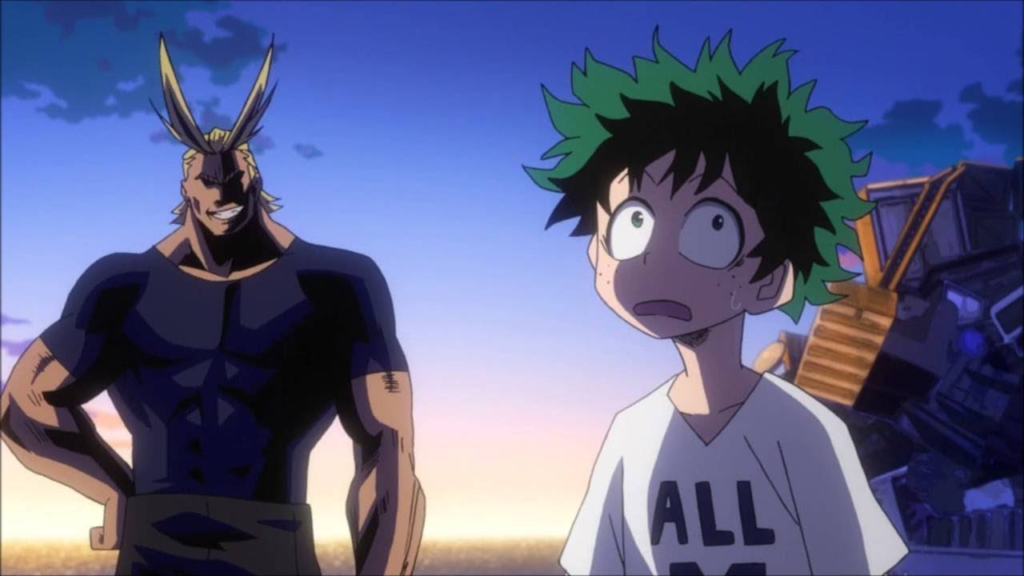
All Might hands One For All to a quirkless teenager and immediately starts wasting away. This is presented as noble sacrifice. It’s actually the most selfish thing he’s ever done.
Deku doesn’t inherit a quirk. He inherits All Might’s unfinished business, his enemies, his impossible standard, and his pathological need to smile while his organs liquefy. All Might doesn’t train a successor—he creates a tribute act. Every time Deku breaks his bones trying to replicate All Might’s moves, it’s because All Might never taught him to be anything else.
The show knows this. During the Kamino Ward arc, All Might burns through the last embers of One For All to defeat All For One, and it’s framed as triumphant. But watch what happens after: Deku immediately starts spiraling, convinced he has to become strong enough to replace him. All Might’s retirement doesn’t free Deku. It traps him.
What’s worse is that All Might keeps interfering. He can’t stop being a mentor even after he’s powerless, so he hovers, offering advice Deku doesn’t need while failing to address the core issue: Deku is destroying himself because All Might taught him heroism is self-annihilation with good PR.
The relationship is codependent in the clinical sense. All Might needs Deku to succeed so his legacy survives. Deku needs All Might’s approval so he knows he’s worthy of the quirk. Neither of them can escape the loop, and the show’s attempts to frame this as heartwarming just make it sharper.
By the time the Dark Deku arc rolls around, where Midoriya isolates himself and tries to shoulder everything alone, it’s not a breakdown. It’s the logical conclusion of being raised by someone who taught him that suffering alone is the only heroism that counts.
Mob Psycho 100: The Conman Who Accidentally Cares
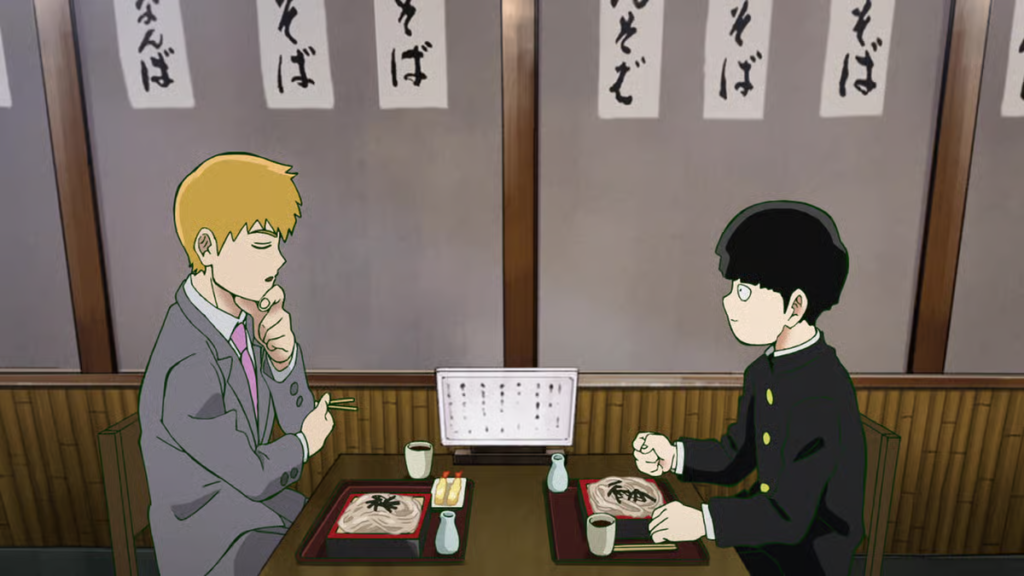
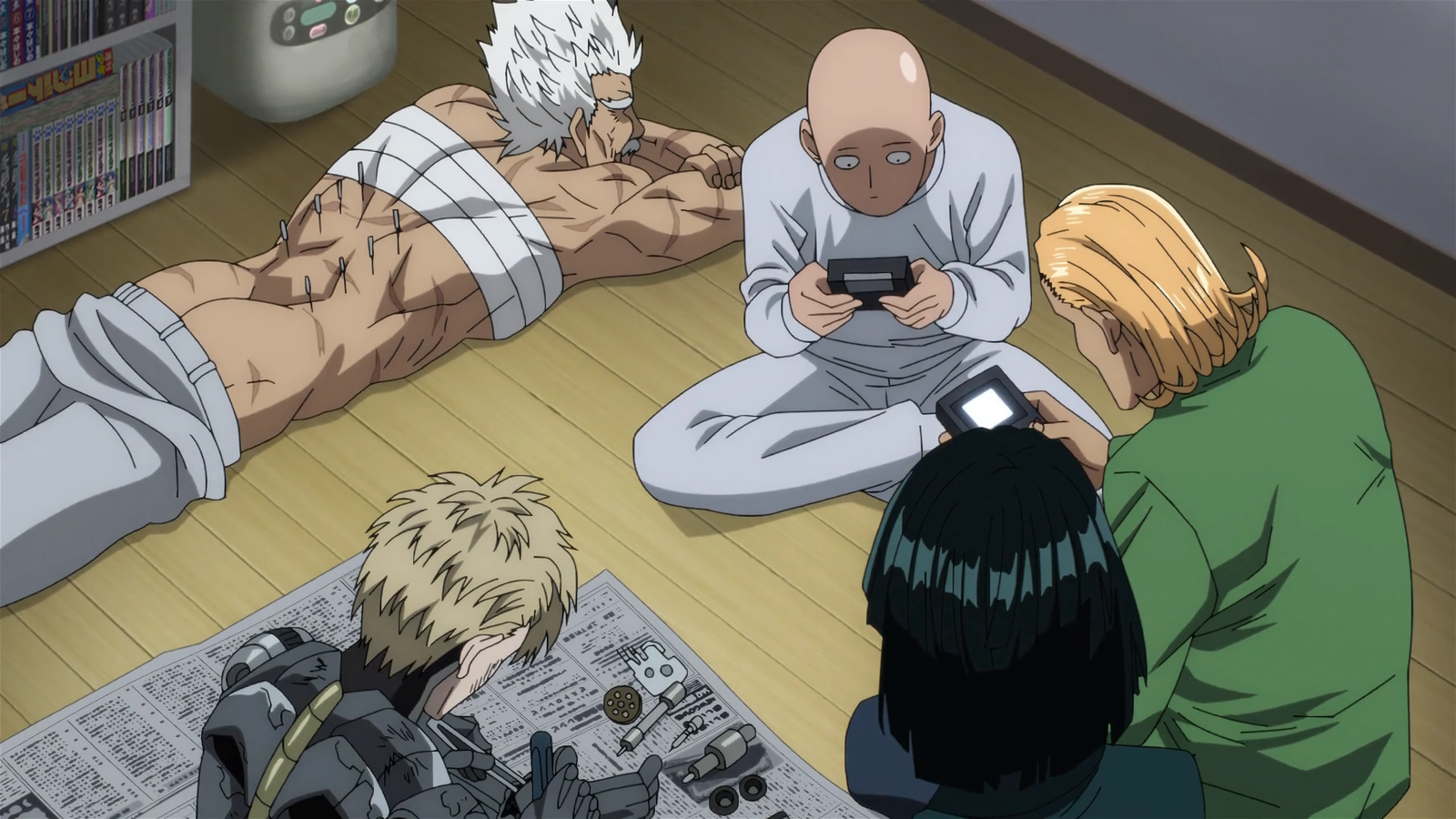
Reigen Arataka is a charlatan running a psychic exorcism business with zero psychic ability. He pays Mob minimum wage to do actual exorcisms while he performs salt tosses and makes up terminology. It’s child labor dressed as mentorship.
Except Reigen also tells Mob—constantly, sincerely—that psychic powers don’t make him special. That being kind matters more than being strong. That he doesn’t have to hurt people just because he can. And this advice works. Mob becomes one of the most emotionally stable protagonists in anime specifically because a con artist taught him his value isn’t conditional on his abilities.
This shouldn’t be possible. Reigen is selfish, manipulative, and absolutely exploiting a middle schooler for profit. But he’s also the only adult in Mob’s life who doesn’t treat his powers like a weapon to be refined. Everyone else—other espers, older psychics who see potential—treats Mob as raw material. Reigen sees him as a kid who needs to hear he’s enough.
The contradiction reaches full chaos during the World Domination arc, when Reigen’s lies finally collapse and Mob walks away. Reigen spirals, realizes he’s nothing without Mob, and the show doesn’t redeem him with a grand gesture. Instead, Mob comes back because he decides to. Not because Reigen earned it. Because Mob wants someone in his corner, even if that person is deeply flawed.
What makes this mentorship complicated is that Reigen’s incompetence is the entire point. He can’t teach Mob psychic techniques because he doesn’t have any. So instead, he teaches him how to be human. The lesson only works because the teacher is a fraud. A real master would’ve turned Mob into a weapon. Reigen, by being useless at everything except caring, turned him into a person.
It’s mentorship as accidental harm reduction, and the show has the audacity to suggest that sometimes the best teacher is the one who has no idea what they’re doing but shows up anyway.
Vinland Saga: When Your Mentor Is Your Enemy
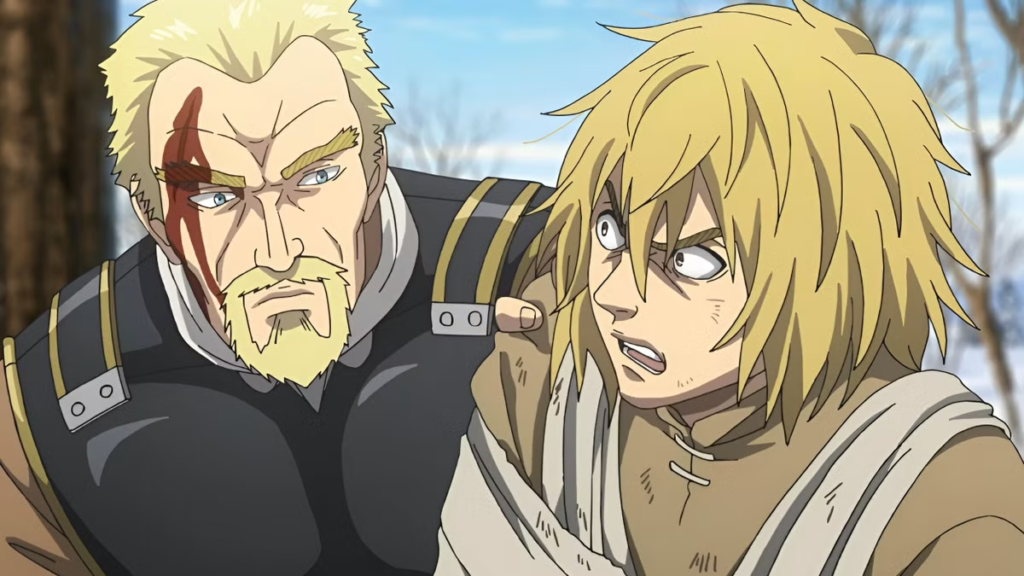
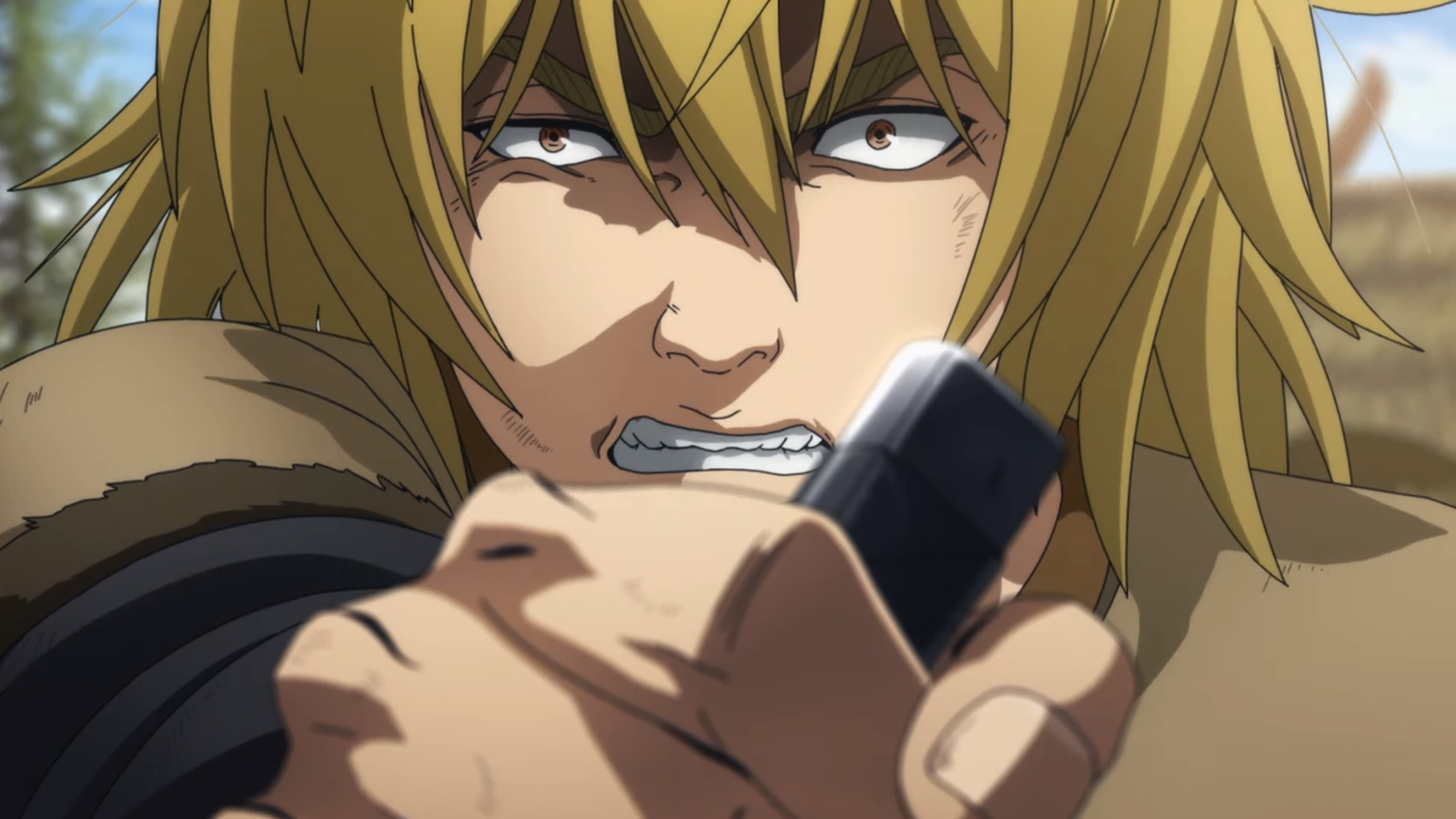
Askeladd murders Thorfinn’s father in front of him when he’s six years old. Then he lets Thorfinn follow him for over a decade, promising him duels he’ll never win, using him as a weapon, and training him into the perfect instrument of revenge. It’s grooming, but for violence.
Thorfinn spends his entire adolescence in Askeladd’s warband, believing that if he gets strong enough, skilled enough, ruthless enough, he’ll earn the right to kill him. The show is very clear this is insane. Askeladd knows Thorfinn will never beat him. The duels are a leash. Thorfinn’s revenge fantasy is the thing keeping him obedient.
And then—in the single most devastating subversion of the mentor’s death trope—Askeladd dies, and Thorfinn breaks. Not because he loved him. But because his entire identity was built around killing him. Without that purpose, he’s hollow. The revenge he wanted was the only thing making him a person.
Here’s the real cruelty: Askeladd did teach him. Every tactical lesson, every survival skill, every moment of violence Thorfinn learned was Askeladd’s curriculum. Thorfinn becomes a brilliant warrior specifically because he was trained by the man who destroyed him. The abuse was the education.
What’s worse is that Askeladd’s final act—killing King Sweyn to protect Wales—teaches Thorfinn the only lesson that could’ve saved him: that revenge is empty, and violence devours meaning. But Askeladd had to die for Thorfinn to learn it, and by then, Thorfinn is too shattered to absorb it immediately. It takes him years of slavery and silence to even begin processing what Askeladd’s death meant.
This is mentorship as mutual destruction. Askeladd needed Thorfinn to carry out violence he was too calculating to commit recklessly. Thorfinn needed Askeladd to justify his existence. Neither of them could escape until one of them died, and even then, the survivor barely made it out.
Why Japanese Storytelling Keeps Breaking Mentors
There’s a reason these narratives keep surfacing in anime, and it’s not hard to trace the pattern to how hierarchical relationships function in Japanese society. The senpai-kohai system—senior-junior relationships in schools, companies, martial arts—still governs massive parts of daily life. It’s hierarchical, rigid, and often brutal. You’re expected to endure, absorb criticism, and replicate the system for the next generation.
Anime keeps deconstructing mentorship because the real-world version often feels this way. Overwork is so normalized there’s a word for it—karoshi, death by overwork. The education system is pressure-tested to fracture. And all of this is perpetuated by older generations insisting that suffering builds character.
Shows like these aren’t rebelling against mentorship. They’re documenting what it actually feels like when the people who are supposed to guide you are also the ones enforcing a system that devours you. Gon chasing Ging mirrors kids chasing parental approval that will never come. Naruto’s cycle of trauma is every office worker who becomes the boss they hated. Deku’s self-destruction is the student who can’t stop even after they’ve burned out.
These aren’t fantasies. They’re exhaust ports for a culture that demands excellence and offers very little safety. The mentors fail because they’re products of the same meat grinder. They teach what they know: how to survive, not how to be whole.
The Uncomfortable Truth
Mentorship in these anime doesn’t fix anyone. It complicates them. The students grow despite the damage, not because of the guidance, and the teachers are often just people who figured out how to function inside their own wreckage.
What makes these stories compelling isn’t that they offer solutions. It’s that they admit the problem. That sometimes the person teaching you is also the person breaking you. That care and harm can come from the same hand. That you can be grateful to someone and also recognize they should never have been in charge of you.
These shows don’t end with the student surpassing the master in a triumphant moment of growth. They end with the student realizing they were never supposed to become their mentor. They were supposed to survive them.